





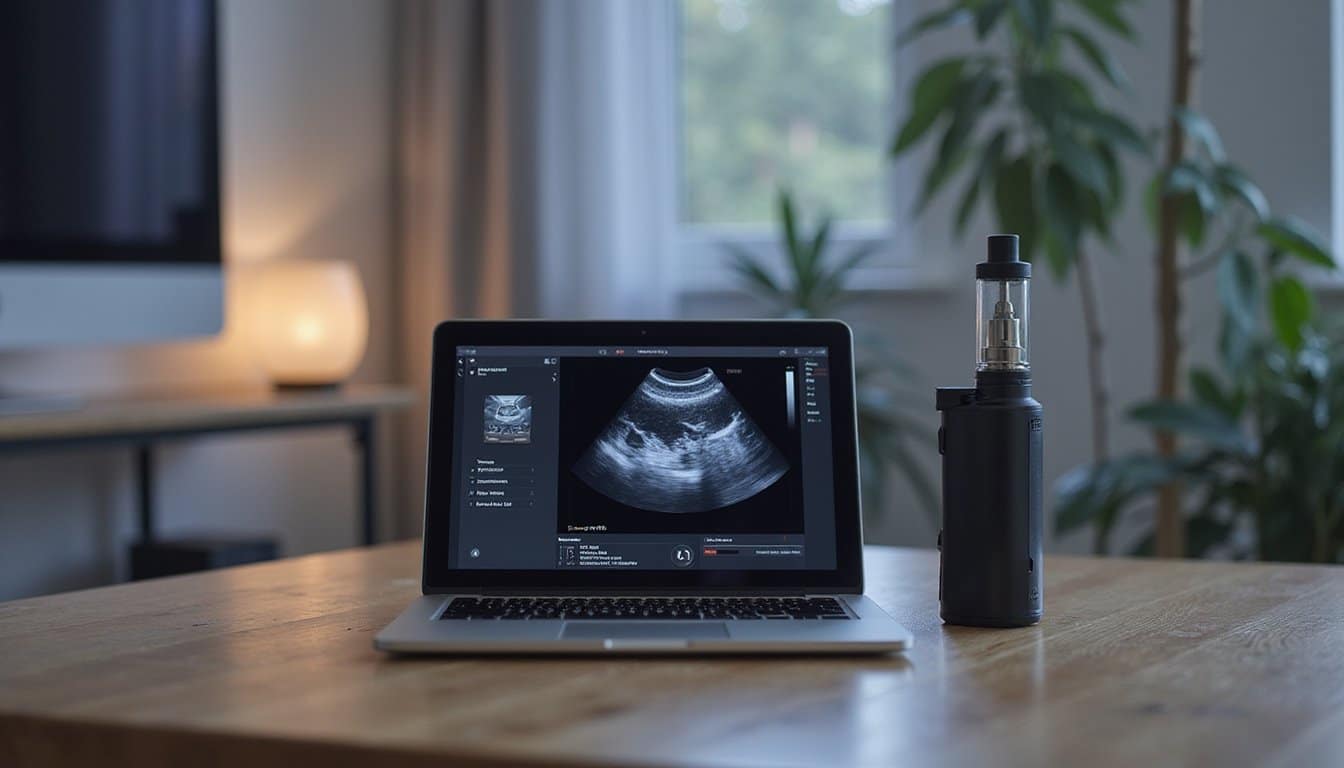
Vaping during pregnancy isn’t safer than smoking, it exposes your baby to nicotine, heated solvents, and toxic flavorings that damage your placenta and restrict nutrient delivery. Research shows fetuses of vapers measure markedly smaller in weight and bone length, while e-cigarette chemicals disrupt critical lung development genes. You’ll also face approximately 40% higher odds of preterm birth and increased miscarriage risk. Understanding these specific biological pathways can help you make informed decisions about your pregnancy.
Why E-Cigarettes Are Not a Safe Alternative to Smoking During Pregnancy
E-cigarettes aren’t the safer pregnancy alternative many people assume them to be. When you vape, you’re inhaling more than just nicotine, you’re exposing your developing baby to heated solvents, flavorings, and toxic byproducts that can harm embryonic tissues.
Vaping delivers heated chemicals directly to your developing baby, not the safer alternative pregnant women hope for.
Duke University animal research demonstrates that flavored e-cigarette vapors are “extremely toxic” to the fetus, even without nicotine present. These aerosols disrupt placental gene expression, contributing to placental toxicity that compromises oxygen delivery and fetal development. Studies examining implant site elongation and embryo development reveal measurable differences in how embryos develop under e-cigarette exposure conditions.
Major health agencies classify e-cigarettes as tobacco products, treating prenatal exposure with the same concern as traditional cigarettes. Research also links pre-conception vaping to increased gestational hypertension risk, adding maternal complications that further threaten pregnancy outcomes. A retrospective study found that size deficits became larger and affected more growth parameters as pregnancy progressed, with significant differences in femur length, fetal weight, and birth measurements between e-cigarette users and non-users.
Mayo Clinic experts are clear: vaping during pregnancy isn’t safe and shouldn’t be considered risk-free.
How Nicotine and Vape Chemicals Damage the Placenta and Nutrient Delivery
When nicotine enters your bloodstream during pregnancy, it directly attacks the placenta’s ability to anchor itself and deliver nutrients to your baby. Nicotine binds to receptors on placental cells, inhibiting trophoblast invasion and reducing MMP9 activity essential for proper implantation. This disruption downregulates critical transcription factors like Hand1 and GCM1, impairing placental development. Poor trophoblast invasion correlates with placental pathologies like fetal growth restriction.
Nicotine also damages vascular networks by decreasing CD31 expression and suppressing EG-VEGF and VEGF signaling. Reduced vascularization increases placental resistance and limits blood flow, creating chronic hypoxia marked by elevated CA-IX levels.
Vaping compounds this damage through placental oxidative stress from flavorants and solvents, which harm cellular structures and DNA. The aerosol from e-cigarettes contains carbonyl compounds and heavy metals that further contribute to cellular damage. The combined effects compromise nutrient exchange capacity, leading to fetal nutrient deprivation even when placental size appears normal. Your baby receives less oxygen and fewer essential nutrients for development.
The Direct Effects of Vaping on Fetal Growth, Bone Development, and Lung Formation

When you vape during pregnancy, the chemicals you inhale directly impair your baby’s growth trajectory, research shows fetuses exposed to e-cigarettes measure up to 28.5 percentile points smaller in femur length and 17.2 percentile points lower in estimated weight by the third trimester. These growth deficits persist at birth, with exposed newborns showing considerably reduced weight, length, and head circumference compared to unexposed infants. Beyond stunted growth, vaping alters the expression of genes critical for lung development, disrupting the oxidative-stress and hypoxia-response pathways your baby’s lungs need to form properly. Mouse studies demonstrate that in utero exposure to propylene glycol and glycerol, common e-cigarette ingredients, caused offspring to be born with narrowed facial features and shortened skulls, even without nicotine present. Research indicates that even e-cigarettes without nicotine pose dangers, as flavored vapors may increase the risk of miscarriage due to toxic additives and flavorings that cause harmful effects when inhaled.
Stunted Fetal Growth Patterns
Though many users assume e-cigarettes pose fewer risks than traditional cigarettes, emerging research reveals that vaping during pregnancy directly stunts fetal growth across multiple parameters.
Studies show prenatal e-cigarette exposure reduces fetal weight percentiles by approximately 17.2 points by the third trimester. Your baby’s femur length suffers even greater deficits, up to 28.5 percentile points below non-exposed fetuses, indicating skeletal mineralization disruption that disproportionately impairs bone development.
At birth, exposed infants demonstrate markedly smaller measurements across weight, length, and head circumference. Population data confirm pregnant vapers face 33% higher low-birthweight rates compared to non-users. Among women who exclusively vaped, the rate of low-birthweight births reached 10.6%, significantly exceeding the 7.6% rate observed in non-users.
These growth deficits stem partly from placental vascularization abnormalities that compromise nutrient and oxygen delivery. Animal models demonstrate reduced fetal-to-placental weight ratios, reflecting impaired placental efficiency similar to maternal malnutrition effects.
Impaired Lung Gene Expression
Beyond skeletal deficits, prenatal vaping fundamentally disrupts your baby’s lung development at the genetic level. Research shows e-cigarette aerosol exposure dysregulates the fetal lung transcriptome, affecting up to 23,483 genes and altering 159, 207 cellular pathways critical for proper lung formation.
Key genetic disruptions include:
- Altered surfactant production pathways essential for newborn breathing
- Disrupted airway branching through impaired lung morphogenesis genes
- Activated hypoxia and reactive oxygen species response genes indicating oxidative stress
- Transcriptional signatures mimicking classic tobacco-related lung injury patterns
Both nicotine-containing and nicotine-free aerosols cause these changes, confirming that solvents and flavorings independently damage developing lung tissue. These molecular disruptions establish the foundation for structural abnormalities and functional deficits that emerge after birth. Studies reveal that neonates exposed prenatally to e-cigarette aerosols display an emphysema-like phenotype in their lung tissue, demonstrating how genetic damage translates into visible structural harm. Research demonstrates that in utero e-cigarette exposure specifically dysregulates Wnt signaling genes, with females showing approximately 120 affected genes compared to 40 genes in males at postnatal day 5.
Understanding the Risks of Preterm Birth, Miscarriage, and Pregnancy Complications
When you vape during pregnancy, you’re increasing your risk of delivering your baby before 37 weeks, which can lead to serious health complications for your newborn. Research links e-cigarette use to higher rates of miscarriage and fetal death, with mint/menthol-flavored products showing more than three times the odds of pregnancy loss compared to other flavors. You’re also more likely to have a baby with low birth weight, a condition that puts infants at greater risk for developmental problems and long-term health issues. Women who perceived e-cigarettes as less harmful than traditional cigarettes were less likely to quit vaping during pregnancy, highlighting the danger of misconceptions about vaping safety. E-cigarettes also contain heavy metals like nickel, tin, and lead, along with artificial flavorings that expose your developing baby to potentially harmful substances.
Preterm Delivery Risks
Because e-cigarette use during pregnancy exposes the developing fetus to nicotine and other potentially harmful substances, researchers have examined whether vaping increases the risk of delivering before 37 weeks. Current evidence shows concerning associations between prenatal vaping and preterm birth, with nicotine exposure patterns playing a critical role in fetal development disruption.
Key findings on preterm delivery risks:
- Meta-analyses show e-cigarette use increases preterm birth odds by approximately 40% compared to non-use.
- Exclusive third-trimester vaping correlates with higher preterm delivery rates.
- Dual use maintains elevated obstetric risks, with addiction severity compounding exposure harm.
- Vaping doesn’t appear safer than smoking for preterm outcomes, risks remain comparable.
You won’t reduce your preterm birth risk by switching from cigarettes to e-cigarettes. Clinical guidance recommends complete cessation of all nicotine products during pregnancy. Research from PRAMS data shows that over one-third of dual users quit both e-cigarettes and cigarettes during pregnancy, demonstrating that complete cessation is achievable even for those with multiple nicotine dependencies.
Miscarriage and Pregnancy Loss
Although research specifically examining e-cigarette use and miscarriage remains limited, the available evidence raises significant concerns about pregnancy loss risks. One human study found increased miscarriage rates among e-cigarette users compared with non-users. Animal research demonstrates that e-cigarette aerosols, even without nicotine, cause early pregnancy losses by disrupting placental genes controlling oxygen regulation and stress responses.
You should understand that antioxidant depletion and inflammation from vaping’s solvents, flavorings, and ultrafine particles can destabilize early gestation. While nicotine driven preterm delivery represents one concern, researchers found flavored vapors alone proved “extremely toxic” to developing embryos. Studies show that fruit was the most commonly used flavor among pregnant vapers, followed by candy and mint varieties.
No safe exposure level exists during pregnancy. Clinical guidance treats vaping as a potential miscarriage risk rather than a safe alternative, particularly given confounding from dual cigarette use in available studies. However, a recent analysis of the PRESTO preconception cohort found that preconception vaping was not significantly associated with spontaneous abortion incidence, highlighting the need for more research specifically during pregnancy.
Low Birth Weight Outcomes
Beyond miscarriage risks, e-cigarette use during pregnancy poses measurable threats to fetal growth and birth weight. Research shows exclusive vapers face a low birth weight prevalence of 10.6% compared to 6.1% among non-users, with an adjusted prevalence ratio of 1.88. Daily vaping carries the greatest risk, supporting a nicotine dose-response relationship.
Key findings on adverse maternal outcomes:
- Low birth weight (under 2,500g) increases risks of respiratory problems, infections, and chronic disease
- Exclusive e-cigarette users show 12.4% preterm birth prevalence versus 7.6% in non-users
- Small for gestational age infants face neurodevelopmental impairment and metabolic disorders
- Nicotine withdrawal risks don’t justify continued exposure given documented fetal harm
These outcomes occur independently of combustible cigarette use, confirming e-cigarettes present distinct developmental hazards. Additionally, one study reported increased irritability in infants who were exposed to e-cigarettes during pregnancy.
Long-Term Neurodevelopmental and Respiratory Health Consequences for Children
Research on prenatal nicotine exposure reveals concerning patterns of neurodevelopmental harm that likely extend to e-cigarette use. Your baby’s developing brain accumulates nicotine at higher concentrations than your bloodstream, disrupting synapse formation and neurotransmitter systems critical for cognition.
| Risk Category | Associated Outcomes | Developmental Impact |
|---|---|---|
| Cognitive | Lower IQ, impaired executive function | Delayed developmental milestones |
| Behavioral | ADHD, externalizing behaviors | Challenges requiring parental mental health support |
| Academic | Learning difficulties | Poorer school performance |
Beyond nicotine, e-cigarette solvents pose independent risks. Studies show propylene glycol and vegetable glycerin exposure causes reduced cranial width and height in offspring, even without nicotine. These structural changes suggest vaping’s “safer” components aren’t benign during critical brain development periods. You’re exposing your child to multiple teratogenic pathways simultaneously.
Debunking Common Misconceptions About Vaping Safety During Pregnancy

Understanding the developmental risks your child faces from prenatal vaping is only half the equation, you also need accurate information to counter the persistent myths that downplay these dangers.
Common Misconceptions You Should Reject:
- “It’s just harmless water vapor”, E-cigarette aerosol contains nicotine, heavy metals, and volatile organic compounds that cause increased oxidative stress and inflammatory responses in fetal tissues.
- “Vaping is safe because it’s less harmful than smoking”, Lower harm doesn’t equal safety; dual use carries risks similar to smoking alone.
- “Nicotine without smoke won’t hurt the fetus”, Nicotine is a developmental toxicant that damages fetal brain and lung development regardless of delivery method.
- “No strong human data means it’s safe”, Limited research reflects study gaps, not confirmed safety.
What Public Health Experts Recommend for Pregnant Individuals Who Vape
If you’re currently vaping during pregnancy, public health experts deliver a unified message: stop completely. The CDC, ACOG, and USPSTF all recommend immediate cessation of e-cigarettes and all nicotine products during gestation. No amount of vaping is considered safe for fetal development.
Your healthcare provider should screen you for vaping at every prenatal visit and offer evidence-based counseling approaches. Behavioral interventions remain the first-line treatment, including motivational interviewing, quitline referrals, and structured support programs using the 5 A’s framework.
Regarding pharmacotherapy recommendations, current evidence remains insufficient to assess benefits and harms of cessation medications during pregnancy. Similarly, experts don’t endorse switching to e-cigarettes as a harm-reduction strategy. Instead, they recommend complete nicotine abstinence, with ongoing postpartum follow-up to prevent relapse.
The hardest part is deciding to begin everything else, we’ll figure out together. Miami Substance Abuse Treatment connects you with compassionate providers across Miami who see your potential, not just your struggle. Whether you need medical detox, residential treatment, outpatient flexibility, or continued support, we’ll find what fits. One call can change everything reach us at (786) 228-8884 and start writing your comeback story.
Frequently Asked Questions
Can Secondhand Vape Exposure From a Partner Harm My Developing Baby?
Yes, secondhand vape exposure from your partner can harm your developing baby. When you inhale exhaled aerosol, nicotine and toxic chemicals enter your bloodstream and cross the placenta. This creates significant fetal development risks, including low birth weight, preterm birth, and impaired brain and lung development. Health authorities confirm that no safe exposure level exists during pregnancy, breathing your partner’s vape aerosol poses risks comparable to smoking yourself.
How Soon Should I Quit Vaping Before Trying to Conceive?
You should quit vaping as early as possible before trying to conceive, there’s no established “safe” quit vaping timeline. Experts recommend complete vaping cessation preparation well in advance because nicotine and other toxicants can cross the placenta, potentially reaching higher levels in your baby than in your own blood. Since pregnancies often occur before you realize you’re pregnant, stopping now minimizes early developmental risks to your future baby.
Are Nicotine Patches or Gums Safer Alternatives for Pregnant Vapers?
Nicotine replacement therapy like patches or gum is generally considered safer than vaping during pregnancy because you avoid inhaling toxic aerosol compounds and ultrafine particles. However, fetal nicotine exposure still carries risks to your baby’s cardiovascular and neurodevelopmental systems. Guidelines recommend trying behavioral support first, then considering NRT only under medical supervision if you can’t quit otherwise. Fast-acting gum may be preferable to continuous-release patches for minimizing total fetal exposure.
Does Vaping During Breastfeeding Also Affect My Baby’s Health?
Yes, vaping during breastfeeding affects your baby’s health. Nicotine alters breastmilk composition and passes directly to your infant, potentially disrupting heart rate, blood pressure, and sleep patterns. Research shows nicotine exposure can interfere with infant development, including craniofacial growth and metabolic regulation. You’re also exposing your baby to secondhand aerosol containing formaldehyde and trace metals. Health organizations advise against e-cigarette use while breastfeeding due to these documented risks and unknown long-term effects.
Can Fertility Be Affected by Vaping Before Becoming Pregnant?
Yes, vaping affects fertility in both partners before conception. Research shows women who vape experience longer time to conceive, reduced ovarian reserve, and lower fertilization rates. For men, vaping effects fertility through decreased sperm concentration, impaired motility, and abnormal morphology. E-cigarette aerosols contain endocrine-disrupting compounds that compromise reproductive function. You should reduce vaping prior conception to optimize your chances of conceiving, as some fertility damage may be partially reversible with cessation.