





Different drugs require distinct detox approaches due to their unique effects on your brain’s reward and stress systems. You’ll need specialized medical protocols based on the specific substance, duration of use, and your individual risk factors. For example, alcohol withdrawal can be life-threatening without proper supervision, while opioid detox often requires medication-assisted treatment. Understanding these substance-specific differences will help you make informed decisions about your safest path to recovery.
Understanding Drug-Specific Withdrawal Mechanisms

While drug withdrawal manifests through diverse mechanisms, the neurobiological foundations primarily involve two key systems: the downregulated dopamine reward pathway and the upregulated brain-stress system.
When you’re undergoing withdrawal, your brain exhibits specific pharmacological mechanisms centered in the ventral striatum and extended amygdala regions. The process involves decreased activity in your mesocorticolimbic dopaminergic system, particularly affecting the nucleus accumbens and amygdala. These neurobiological factors trigger common withdrawal symptoms like anxiety, nausea, and sleep disturbances. Short-acting drugs like benzodiazepines tend to cause more severe symptoms during withdrawal. The extended amygdala plays a crucial role in facilitating the stress response system during withdrawal. Research shows that withdrawal symptoms vary in both trajectory and severity over time, making each person’s experience unique.
You’ll find that withdrawal patterns vary noticeably between individuals due to multiple factors beyond just biological responses. Environmental influences, such as cue reactivity and drug administration rituals, can trigger withdrawal symptoms independently of dropping drug levels, highlighting the complexity of withdrawal processes.
Medical Vs Natural Detox: Key Differences
When you’re considering detox approaches, you’ll find that medical detox programs offer extremely high completion rates compared to natural methods due to their professional oversight and symptom management. You’ll receive 24/7 monitoring of your critical signs in a medical setting, while natural detox lacks these indispensable safety measures. Natural detox mainly involves eating healthy foods and getting plenty of rest to support the body’s natural healing process. Your risk of complications drops enormously with medical detox since healthcare professionals can immediately respond to any emergencies, whereas natural detox leaves you vulnerable to potentially dangerous withdrawal symptoms. The medical approach typically requires 5-10 days of inpatient care under the supervision of an interdisciplinary team. For those struggling with alcohol or benzodiazepine addiction, medical detox is essential as withdrawal can be life-threatening when attempting natural methods.
Completion Rates and Safety
Although both medical and natural detox approaches aim to help individuals overcome substance dependence, their completion rates and safety profiles differ markedly. Medical detox programs demonstrate significantly higher completion rates, particularly when accounting for addiction severity impact on outcomes. While relative detox program costs may initially favor natural approaches, the higher risk of complications often leads to costly emergency interventions. Medical supervision provides comprehensive psychological support throughout the detoxification process. Many patients benefit from receiving detox plus rehabilitation, with rates increasing from 46.5% in 2003 to 54.5% in 2011.
Only 13% of individuals with drug use disorders receive treatment, with natural detox attempts showing notably lower success rates. Success rates decline significantly with each subsequent attempt, as patients are 32% less likely to complete a second detox compared to their first try. Medical detox provides vital monitoring and immediate intervention capabilities, reducing the risk of severe complications like seizures or delirium tremens, which carries up to 37% mortality when untreated. For optimal outcomes, you’ll find medical detox offers the safest path through withdrawal while maximizing your chances of converting successfully into long-term recovery treatment.
Only 13% of individuals with drug use disorders receive treatment, with natural detox attempts showing notably lower success rates. Success rates decline significantly with each subsequent attempt, as patients are 32% less likely to complete a second detox compared to their first try. Medical detox provides vital monitoring and immediate intervention capabilities, an approach central to effective cocaine detox treatment, reducing the risk of severe complications like seizures or delirium tremens, which carries up to 37% mortality when untreated. For optimal outcomes, you’ll find medical detox offers the safest path through withdrawal while maximizing your chances of transitioning successfully into long-term recovery treatment.
Monitoring Level Comparison
Crucial differences in monitoring levels between medical and natural detox approaches directly impact patient safety and withdrawal outcomes. In medical detox settings, you’ll receive person-centered monitoring through 24/7 professional supervision, with critical signs checked every 15-30 minutes during essential phases. Medical teams utilize standardized assessment tools and electronic monitoring devices to track withdrawal symptoms precisely. Underlying medical conditions often require this intensive monitoring to prevent life-threatening complications.
Natural detox lacks these structured safeguards, relying instead on sporadic self-monitoring without professional oversight. While medication-assisted support in medical settings enables immediate intervention for complications, natural detox offers no such protection. The absence of qualified medical staff, emergency response protocols, and continuous critical sign monitoring in natural detox drastically increases risks. Research consistently shows that professional monitoring reduces complications and improves outcomes compared to unsupervised withdrawal attempts.
Specialized Approaches for Opioid Detoxification

How does modern medicine approach the complex challenge of opioid detoxification? Modern protocols focus on two primary pathways targeting opioid receptor function: traditional pharmacological methods and rapid detox alternatives. These treatments require careful monitoring as withdrawal symptoms typically emerge within 6 to 12 hours after the last dose of short-acting opioids.
The conventional approach uses medications like methadone or buprenorphine, gradually diminishing doses over 3-21 days. You’ll find these treatments are both cost-effective and safer, with buprenorphine outpatient detox costing around $491 per episode and showing minimal adverse events. Studies show that serious adverse events occurred in multiple patients undergoing rapid detox procedures, including cardiac arrest and death. Most detoxification programs are delivered through community-based services, as they provide accessible treatment options for the majority of patients.
Rapid detox methods, while producing higher short-term abstinence rates at 59%, come with significant risks and costs. You’ll need to ponder that ultra-rapid detox requires ICU admission and full anesthesia, while rapid detox uses lighter sedation. At $2,689 per episode, these approaches aren’t typically recommended as primary treatments due to safety concerns.
Alcohol Withdrawal: Unique Challenges and Protocols
Unlike many other drugs, alcohol withdrawal can pose immediate life-threatening risks, requiring careful medical supervision throughout the detoxification process. You’ll need continuous monitoring of critical signs and withdrawal symptoms, as severe cases can progress to potentially fatal complications like seizures and delirium tremens. Professional medical monitoring becomes indispensable when you’ve engaged in heavy alcohol use for more than two weeks, as withdrawal symptoms can escalate rapidly and unpredictably within the initial 72 hours after your last drink. The recovery journey often extends beyond the acute phase, with some individuals requiring up to 1 week or longer to fully stabilize from withdrawal symptoms. Treatment typically includes medication management to help ease withdrawal symptoms and prevent dangerous complications.
Potentially Fatal Withdrawal Symptoms
Among substance withdrawal syndromes, alcohol detoxification stands out as distinctively dangerous with potentially lethal complications. Unlike opioid or marijuana withdrawal, alcohol’s unique fatality risks include a mortality rate of up to 35% in untreated delirium tremens cases. Early intervention importance cannot be overstated, as proper medical treatment reduces this rate to 1-4%.
You’ll recognize severe withdrawal symptoms through:
- Generalized seizures occurring 12-48 hours after the last drink, affecting 3-5% of cases
- Delirium tremens presenting 48-96 hours post-cessation with vivid hallucinations and severe confusion
- Autonomic instability featuring heart rates above 100 bpm, high blood pressure, and fever exceeding 38°C
Previous withdrawal episodes, liver dysfunction, and advanced age increase your risk of life-threatening complications.
Medical Monitoring During Detox
Proper medical monitoring during alcohol detox requires a systematic, evidence-based approach that combines validated assessment tools with rigorous physiological tracking. You’ll need regular CIWA-Ar assessments, comprehensive lab work, and critical sign monitoring throughout the withdrawal process. Your healthcare team will coordinate interdisciplinary care to guarantee safety and effectiveness.
| Monitoring Phase | Assessment Tools | Action Required |
|---|---|---|
| Initial | CIWA-Ar, Labs | Baseline evaluation |
| Active Withdrawal | Vitals q4h, CIWA-Ar | Medication adjustment |
| Post-acute | Weekly visits | Recovery support |
Post discharge monitoring continues for several weeks, with frequency based on your specific risk factors. You’ll need follow-up appointments, ongoing lab work, and regular check-ins with your care team to prevent relapse and address any emerging complications during your recovery path.
Managing Benzodiazepine Dependency Safely
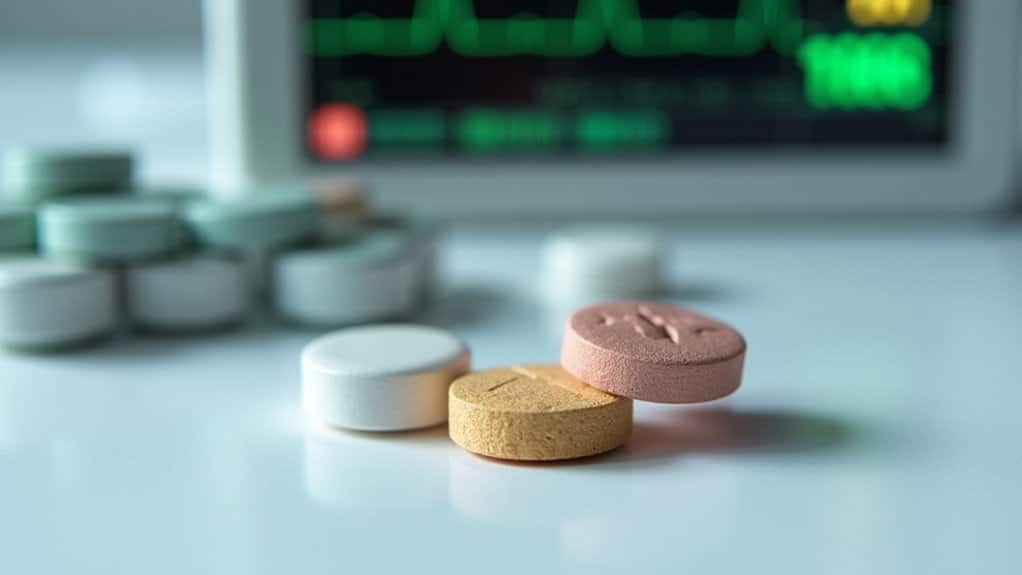
Successfully managing benzodiazepine dependency requires a systematic approach based on precise categorization of use patterns. You’ll need to follow specific dosage titration guidelines while maintaining taper schedule flexibility based on your individual response. The severity of your withdrawal management depends on your daily dose, duration of use, and the specific benzodiazepine you’re taking.
Critical safety protocols include:
- Converting to diazepam before tapering due to its longer half-life and precise dosing options
- Implementing a gradual reduction schedule of approximately 10% daily for most cases
- Monitoring withdrawal symptoms closely to calibrate the taper rate as needed
For high-dose dependencies exceeding 40mg diazepam equivalent daily, you’ll require inpatient monitoring. Short-acting benzodiazepines like alprazolam need specialized protocols regardless of dosage classification to guarantee safe detoxification.
Stimulant Detox: Breaking the Cycle
Breaking the cycle of stimulant dependency requires understanding the distinct pharmacological patterns of elimination and withdrawal. You’ll find that cocaine clears your system within 24 hours, while methamphetamine‘s metabolites can persist for 3-4 days. During this critical period, you’ll experience intense psychostimulant craving mitigation challenges.
Client centered withdrawal support typically combines behavioral interventions with symptom management, as there aren’t currently FDA-approved medications for stimulant detox. You’ll benefit most from Motivational Behavioral Intervention (MBI), which shows promising results, especially in residential settings. While physical symptoms aren’t as severe as with other substances, you’ll face significant psychological challenges, including depression and anxiety.
The key to successful recovery lies in maintaining treatment engagement, as withdrawal effects can extend several weeks beyond initial detoxification.
Evidence-Based Treatment Methods
Evidence-based approaches to drug detoxification consistently demonstrate superior outcomes across multiple clinical studies. Your treatment team will develop a patient-centered treatment planning approach based on your specific substance use profile and medical needs. Through careful detox progression monitoring, medical professionals can adjust interventions in real-time to safeguard your security and comfort.
- You’ll receive round-the-clock medical supervision with crucial sign monitoring, medication administration, and immediate response to emerging complications
- Your customized protocol may include FDA-approved medications like buprenorphine for opioids or benzodiazepines for alcohol withdrawal
- You’ll undergo regular assessment using validated clinical tools to track withdrawal severity and treatment response
Whether you choose inpatient, outpatient, or medical detox options, evidence-based protocols substantially increase your chances of successfully completing treatment and moving to long-term recovery.
Risk Factors and Safety Considerations
While evidence-based treatment protocols offer proven paths to recovery, understanding the risks and safety considerations of drug detoxification can mean the difference between life and death. Attempting to detox without professional supervision poses severe dangers, including potentially fatal complications. You’ll find that inpatient detox programs provide the safest environment, with medical staff available 24/7 to monitor and address any emergencies.
Critical risk factors during detox include the type of substance used, duration of addiction, and pre-existing health conditions. Safety considerations for inpatient detox encompass continuous essential sign monitoring, immediate access to emergency care, and medication management to prevent life-threatening withdrawal symptoms. While outpatient programs can be effective, they carry a higher risk of relapse and complications compared to supervised inpatient settings. is outpatient fentanyl detox safe remains a pressing question for healthcare professionals and patients alike. Many individuals considering this option must weigh the convenience and flexibility of outpatient care against the potential risks. It is essential to have a robust support system in place and access to medical supervision to mitigate any dangers associated with detoxing from such a potent substance.
Building a Successful Recovery Foundation
Establishing a strong recovery foundation requires multiple interconnected components working in harmony. Your success depends on implementing holistic wellness strategies that address physical, psychological, and social aspects of recovery. You’ll need to integrate structured routines, support networks, and clear boundaries into your lifestyle changes for recovery.
Building a sustainable recovery means weaving together the essential elements of wellness mind, body, and social support into one cohesive foundation.
- Create a detailed daily schedule that includes therapy sessions, support group meetings, and planned activities to minimize idle time and reduce relapse risks
- Build a multi-layered support system combining family involvement, peer connections, and professional guidance to increase your recovery success by up to 30%
- Establish firm personal boundaries through environmental modifications, digital limits, and assertiveness training to protect your recovery journey
This all-encompassing approach, backed by evidence-based practices, provides the framework needed for sustainable long-term recovery success.
The belief that you’re too busy for treatment is exactly what keeps addiction winning. Miami Outpatient Detox helps you rewrite that story by connecting you with Miami providers who treat working professionals as the rule, not the exception. We’ll find you flexible care that respects your schedule, your privacy, and your need to keep earning while you’re healing. Your job doesn’t have to be a barrier to recovery, call us today at (786) 228-8884 and turn it into the reason you finally get the help you deserve.
Frequently Asked Questions
How Long After Detox Can I Safely Start Exercising Again?
You can begin light physical activity levels within 24-72 hours of detox, once you’re medically cleared by your treatment team. Start with 5-15 minute sessions of gentle exercise like walking or stretching. Monitor your response and keep your heart rate below 50-60% of maximum. You’ll need to gradually increase safe exercise duration by no more than 10% weekly. Always stay hydrated and stop if you experience unusual discomfort.
What Percentage of People Need Multiple Detox Attempts Before Achieving Recovery?
Research shows that most people need at least two serious attempts at detox before achieving lasting recovery. While recurring relapses are common, nearly 57% of individuals don’t complete their initial treatment program successfully. You’ll likely need multiple attempts, as success rates drop by 32% on second tries and continue declining with each subsequent attempt. That’s why it’s imperative to develop long term maintenance strategies alongside your detox plan.
Can I Continue Taking My Regular Prescription Medications During Detox?
You’ll need to consult with your medical provider about maintaining your prescribed medication routine during detox, as each situation is unique. Your doctor will evaluate your current prescriptions, assess potential interactions with detox medications, and develop a safe plan for continuing necessary medications. They may need to adjust dosages or timing of certain medications temporarily. Don’t stop taking prescribed medications without initial discussing it with your healthcare team.
Are There Genetic Factors That Affect How Someone Responds to Detox?
Yes, your genetic predispositions considerably influence how you respond to detox. Your DNA affects both Phase I and Phase II detoxification enzymes, particularly in the CYP450 family, which processes 90% of drugs. These genetic variations create unique metabolic differences in how you break down and eliminate substances. You’ll find that factors like your CYP1A2 and CYP1B1 variants can impact detox effectiveness and determine whether you experience more or fewer side effects during the process.
What Roles Do Family Members Play During the Detox Process?
As a family member, you’ll play several vital roles during detox. You can provide emotional support by being present during visits and offering encouragement during challenging withdrawal symptoms. You’ll help monitor progress, communicate with medical staff about the patient’s history, and encourage lifestyle changes that support recovery. Research shows that family involvement increases treatment success rates by up to 40% and reduces the risk of early departure from detox programs.