





The three key differences between drinker’s nose versus rosacea, you need to know: First, rhinophyma develops from genetic predisposition, not alcohol consumption, with family history of rosacea being your primary risk factor. Second, alcohol can’t cause rhinophyma; it only exacerbates flushing in those already genetically susceptible. Third, while heavy drinking worsens rosacea severity, 10% of patients rarely or never consume alcohol. Understanding how these conditions interact will help you navigate effective treatment strategies.
Rhinophyma Stems From Genetic Predisposition While Alcohol Merely Triggers Existing Symptoms
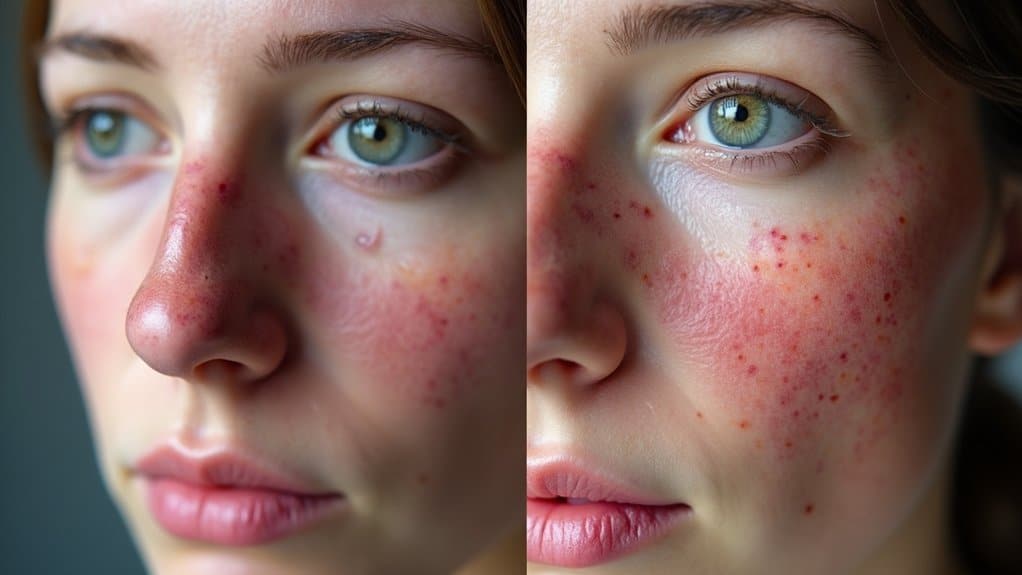
Rhinophyma develops primarily from genetic predisposition rather than lifestyle choices, though this distinction remains widely misunderstood. If you have a family history of rosacea, you’re considerably more prone to developing this condition. Genetic factors influence your skin’s sensitivity to inflammatory stimuli and vascular instability, creating the foundation for rhinophyma progression.
Chronic inflammation from untreated rosacea drives sebaceous gland hyperplasia and fibrotic tissue changes in your nasal skin. You’ll notice that alcohol doesn’t cause rhinophyma, it merely exacerbates flushing in individuals who already carry genetic susceptibility. Fair skin, light eyes, and male sex represent congenital risk factors that compound your baseline vulnerability. Early detection and intervention remain essential for those with family history to prevent progression to advanced rhinophyma. The affected sebaceous glands become colonized by bacteria and Demodex folliculorum mites, further intensifying the inflammatory response.
The condition typically manifests between ages 50, 70, reflecting cumulative inflammatory damage over decades. Environmental triggers accelerate progression but cannot initiate rhinophyma without underlying genetic predisposition.
Heavy Drinking Worsens Rosacea Severity But Cannot Cause the Underlying Condition
While heavy drinking undeniably worsens rosacea symptoms, genetic studies using Mendelian randomization analysis have found no causal association between alcohol consumption and developing the condition itself. Research demonstrates that rosacea develops with equal severity in nondrinkers, with 10% of surveyed patients reporting they rarely or never consumed alcohol. Importantly, multivariable MR analysis confirmed that alcohol consumption has no direct causal effect on rosacea risk even when controlling for smoking behaviors.
Your alcohol sensitivity levels determine symptom intensity rather than disease onset. For 64% of affected individuals, a single drink triggers reactions, while skin flushing patterns vary considerably based on beverage type. Red wine affects 76% of patients due to elevated histamines and tannins, whereas scotch impacts only 21%.
Alcohol exacerbates existing rosacea by dilating cutaneous blood vessels and increasing epidermal blood flow. This mechanism aggravates symptoms without creating the underlying genetic predisposition responsible for the condition’s development. Encouragingly, nearly 90% of patients who limit their alcohol intake report experiencing reduced rosacea flare-ups.
Treatment Success Depends on Addressing Both Alcohol Consumption and the Chronic Skin Disorder
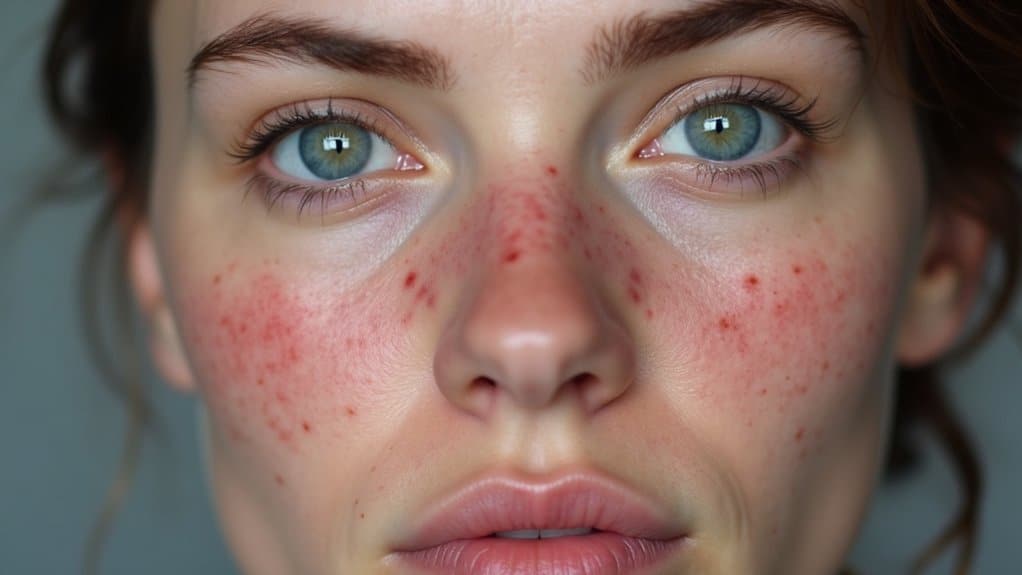
Because rosacea management requires controlling both the underlying skin disorder and its triggers, clinicians now recommend routine alcohol screening in dermatology settings using validated tools like AUDIT or AUDIT-C. This approach recognizes that persistent drinking maintains frequent flare-ups, making it difficult to evaluate therapeutic efficacy of topical vasoconstrictors, oral antibiotics, or laser interventions.
| Treatment Component | Clinical Outcome Without Alcohol Control |
|---|---|
| Topical brimonidine | Diminished efficacy from repeated vasodilation |
| Laser therapy | Worsening telangiectasia despite treatment |
| Oral antibiotics | Inconsistent adherence, reduced remission |
| Trigger avoidance | Impossible to achieve meaningful control |
Integrated dermatological treatment paired with brief alcohol intervention improves long-term disease control and medication adherence. You’ll achieve more durable improvement when you address both the chronic skin disorder and alcohol consumption simultaneously, potentially reducing your overall medication burden. Research shows that red wine triggers rosacea in 76% of affected individuals, making it particularly important to identify which specific alcoholic beverages cause your flare-ups. Studies have found that women who consumed white wine or hard liquor demonstrated a greater risk of developing rosacea compared to other alcohol types.
The chains of addiction feel heavy until you realize someone is ready to help you break them. Miami Detox Center brings you face to face with Miami’s most sincere treatment experts who understand that your story matters and your recovery is possible. Whether it’s the critical foundation of medical detox, the deep work of inpatient treatment, outpatient options that integrate with your responsibilities, or the sustained encouragement of aftercare, we’ll connect you with the right resources. What feels impossible today can become your reality tomorrow. Call (786) 228-8884 and let’s turn that hope into a plan.
Frequently Asked Questions
Can Rhinophyma Be Reversed if I Stop Drinking Alcohol Completely?
Stopping alcohol completely won’t reverse established rhinophyma. Once you’ve developed permanent tissue overgrowth and fibrosis, these structural changes don’t regress spontaneously. However, alcohol cessation removes a key vasodilating trigger, reducing flushing and inflammation. You’ll need to combine lifestyle modifications with topical skin treatments to control active rosacea. For significant rhinophyma, surgical intervention, including laser resurfacing or excision, remains necessary to restore nasal contour, as medical therapies alone can’t remodel hypertrophic tissue.
Why Do Men Develop Rhinophyma Far More Often Than Women?
You’re more susceptible to rhinophyma due to androgen-driven sebaceous gland hyperplasia. Your male hormones stimulate oil gland overgrowth on nasal tissue, where sebaceous density is already high. Hormonal imbalances favoring androgens create an environment promoting phymatous changes that women’s hormonal profiles typically don’t replicate. Additionally, genetic predisposition combined with delayed treatment-seeking behavior in men allows longer inflammatory progression. Clinical data shows a 6:1 male-to-female ratio, confirming this sex-specific vulnerability pattern.
Which Specific Alcoholic Beverages Trigger Rosacea Flare-Ups the Most?
Red wine triggers rosacea flare-ups most frequently, affecting 72, 76% of alcohol-sensitive patients through potent vasodilatory mechanisms. Your wine consumption patterns greatly impact symptom severity, with white wine provoking reactions in 49, 56% of cases. Beer consumption frequency matters too, triggering flares in approximately 41, 42% of respondents. Among spirits, vodka affects 33% of patients, followed by tequila at 28%. Limiting these specific beverages reduces flare frequency in nearly 80, 90% of affected individuals.
How Long Does It Take for Rosacea to Progress Into Rhinophyma?
Your rosacea progression timeline to rhinophyma typically spans 6, 8 years for severe cases, though this varies considerably. You’ll usually experience decades of rosacea symptoms before phymatous changes emerge, with rhinophyma most commonly developing after age 50. Alcohol’s impact on rosacea accelerates this progression by promoting chronic vasodilation and inflammation. If you’re managing rosacea effectively with early intervention, you can greatly slow or prevent advancement to the phymatous stage.
Will My Children Inherit Rhinophyma if I Have the Condition?
Your children won’t directly inherit rhinophyma, as the condition lacks a confirmed Mendelian inheritance pattern. However, they may inherit a genetic predisposition to rosacea, the underlying disorder that can progress to rhinophyma in severe cases. This elevated susceptibility, combined with lifestyle factors like sun exposure, alcohol consumption, and trigger avoidance, determines their actual risk. Early rosacea identification and management in your children greatly reduces their likelihood of developing phymatous changes.