



Freebase and crack are chemically the same, both are cocaine base that’s been converted from powder cocaine hydrochloride. However, they’re made differently. Freebase uses ammonia and ether extraction, producing a purer product near 100% cocaine. Crack’s simpler baking soda method leaves more impurities and residues behind. Both forms can be smoked, creating intense but short-lived effects that increase addiction risk. Understanding their distinct production processes helps explain their different purity levels and dangers.
What Makes Freebase and Crack Different From Powder?
When comparing freebase and crack to powder cocaine, the fundamental difference lies in their chemical structure. Powder cocaine exists as cocaine hydrochloride, a water-soluble salt you can snort or inject. Freebase and crack, however, represent the drug’s base form with the hydrochloride removed.
When examining freebase cocaine vs crack, you’ll find both share low water solubility and can’t be effectively snorted. They’re lipid-soluble, allowing vaporization when heated. Powder cocaine has a high melting point that causes decomposition when smoked, making it unsuitable for inhalation.
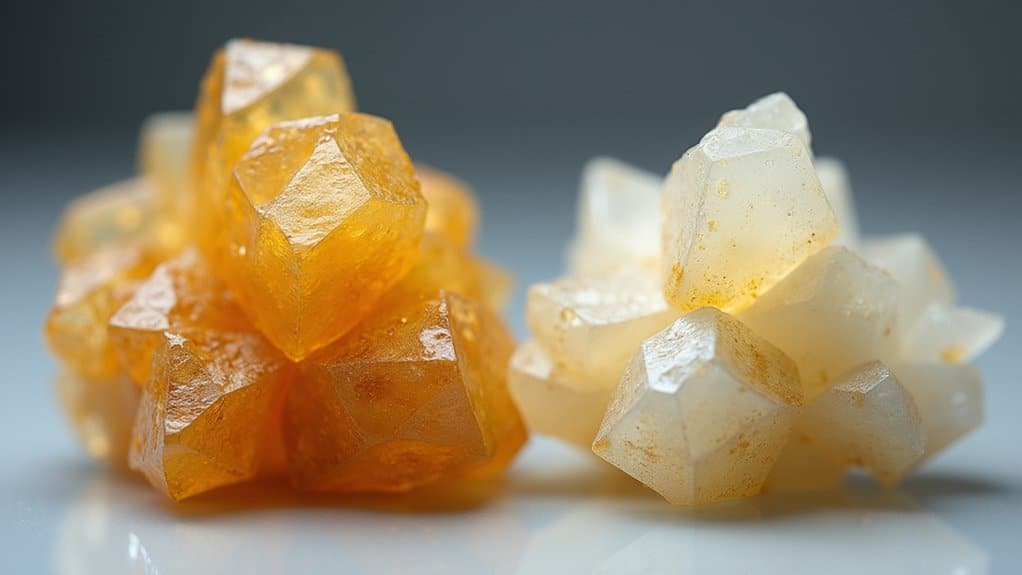
Freebase melts at approximately 98°C, vaporizing easily for smoking. This conversion from salt to base form enables rapid absorption through the lungs, delivering the drug to your brain faster than nasal administration allows. The conversion process involves mixing cocaine hydrochloride with water and a base like baking soda, then heating the mixture to separate the cocaine base. Freebase cocaine is specifically made by adding ammonia to the solution, producing white or yellow crystals that are more potent than the powdered version.
How Do Freebase and Crack Compare in Purity?
When you compare freebase and crack cocaine, purity levels represent a key distinction between these two forms. Freebase cocaine undergoes chemical extraction with ammonia and ether, producing a nearly 100% pure cocaine base that’s free of hydrochloride additives. Crack cocaine, while purer than powder cocaine, often retains baking soda residues from its simpler production method, resulting in a slightly less refined final product. The resulting pure crystalline cocaine is then broken into chunks called ‘rocks’ and sold in small phials or clingfilm wraps. Despite these purity differences, crack cocaine delivers effects that are more rapid but shorter-lived, which often leads to repeated use and stronger psychological dependence. This higher purity in freebase cocaine contributes to effects felt within 10-15 seconds of inhalation, creating an intense and immediate rush.
Freebase Purity Levels
The purity of freebase cocaine approaches nearly 100% because the ammonia extraction process removes the hydrochloride salt and most impurities, leaving behind the cocaine alkaloid in its base form. This freebase purity level exceeds what you find in standard powder cocaine.
Freebase cocaine purity results from several chemical factors:
- The ammonia dissolves the hydrochloride bond, separating the pure alkaloid
- Ether extraction further isolates the cocaine base from remaining contaminants
- The final product contains virtually no cutting agents or additives
You should understand that this high purity directly impacts potency. When you smoke freebase, the pure cocaine base vaporizes at low temperatures and absorbs rapidly into your bloodstream through lung tissue. This delivers concentrated doses to your brain within seconds.
Crack Impurity Retention
Crack cocaine retains noticeably more impurities than freebase because its simpler production method doesn’t separate contaminants as effectively. When you examine crack samples, you’ll find residual cutting agents, processing chemicals, and adulterants that remain embedded in the final product.
Research shows that impurity profiles in cocaine samples change based on storage conditions and purity levels. Lower purity samples, like those typical of crack, demonstrate more substantial alkaloid profile changes over time, particularly at heightened temperatures. This instability affects forensic analysis reliability. These impurities can complicate drug testing results, as urine tests primarily detect benzoylecgonine metabolites rather than the parent compound.
Freebasing crack cocaine involves a less refined process than traditional freebase preparation. While residual solvent profiles remain stable during storage, alkaloid impurities degrade at varying rates depending on the sample’s initial purity. Surface chemistry also influences how crack retains contaminants, with non-polar surfaces preserving impurities longest. These residues can accumulate on clothing, blankets, walls, and skin, creating third-hand smoke contamination that persists in indoor environments. The retained impurities can also affect how the body processes the drug, as metabolism pathways can be affected by drug interactions with these contaminants.
Why Does Freebase Require Dangerous Chemicals to Make?
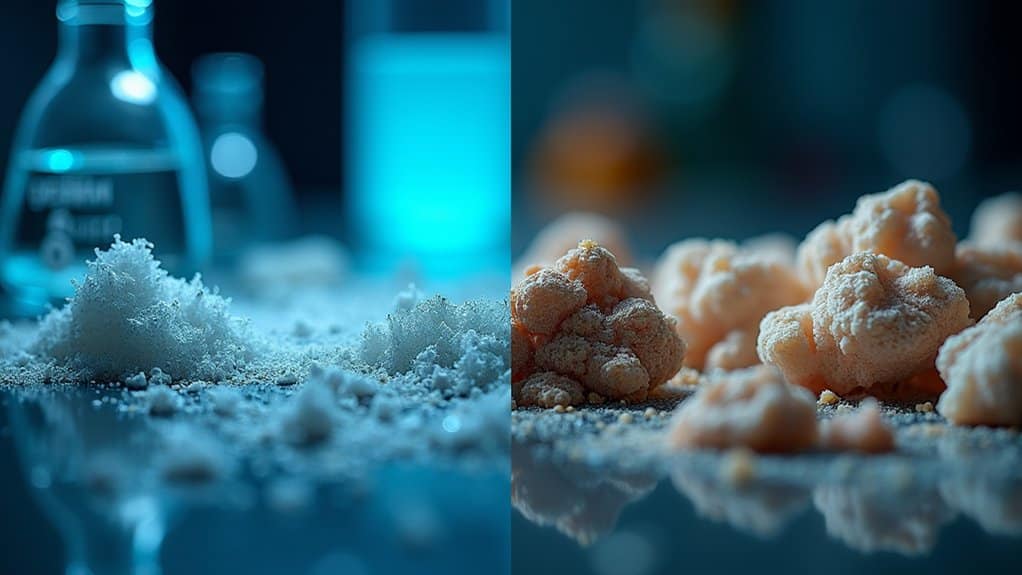
When you convert cocaine hydrochloride to freebase, you’re removing the water-soluble salt to create a pure, smokable base, and this chemical transformation requires non-polar solvents like diethyl ether to extract the cocaine from the aqueous solution. Ether serves as the extraction medium because it dissolves the lipophilic freebase while separating it from water-soluble impurities, but this solvent is extremely flammable and forms explosive peroxides when exposed to air. The demand for high-purity freebase without adulterants means you can’t substitute safer household chemicals the way crack production uses baking soda. This production method can introduce various impurities and adulterants, which may affect the drug’s potency and toxicity. Once the organic layer is separated and evaporated, it leaves behind pure crystals of smokable cocaine. This freebase form was popular among affluent users in the 1970s-1980s before crack cocaine emerged as a more accessible alternative.
Ether’s Flammable Extraction Role
Converting cocaine hydrochloride into freebase cocaine calls for dangerous chemicals because the process relies on chemical extraction principles that demand highly volatile solvents. When you compare freebase crack production methods, the traditional freebase technique uses diethyl ether, which presents extreme hazards.
Ether creates significant dangers during extraction:
- Its flash point of -45°C means vapors ignite from minimal heat or static electricity
- Explosive air mixtures form at concentrations between 1.9-36% by volume
- Autoignition occurs at 160°C, risking spontaneous combustion near any heat source
You’re working with a solvent that dissolves the cocaine base during separation, but evaporation generates flammable vapor clouds. Without proper ventilation, these vapors accumulate rapidly, exceeding explosive limits. Historical incidents document serious explosions resulting from ether use in freebase synthesis. The extraction requires an alkaline solution to shift the equilibrium toward the uncharged non-polar form, which can then dissolve in organic solvents like ether. Similar extraction principles apply to nicotine, where the freebase form is responsible for harshness perception during inhalation.
Purity Demands Volatile Solvents
Achieving the high purity that defines freebase cocaine requires volatile solvents because the extraction process depends on fundamental chemistry principles. When you compare freebase cocaine vs crack, the key difference lies in how each form separates cocaine base from its hydrochloride salt. Freebase won’t dissolve in water, but it readily dissolves in non-polar solvents like diethyl ether or benzene.
You need these solvents to extract the cocaine base from the alkaline solution after ammonia treatment. The organic layer containing dissolved cocaine separates from the water, and evaporation yields nearly pure crystals. This answers whether is freebase cocaine the same as crack, chemically similar, but production methods differ considerably. Crack uses baking soda and heat, avoiding flammable chemicals entirely, making it comparatively safer to manufacture.
How Is Crack Cocaine Made With Baking Soda?
The process of converting cocaine hydrochloride into crack cocaine requires only a few basic materials: powdered cocaine, sodium bicarbonate (baking soda), water, and a heat source. When comparing freebase vs crack, this baking soda method distinguishes crack from traditional freebase preparation. So is freebase the same as crack? Chemically, both produce cocaine in base form, though methods differ.
The conversion follows these steps:
- Dissolve powdered cocaine in water with baking soda
- Heat the mixture until it boils and a solid substance forms
- Cool and separate the resulting rock-like chunks
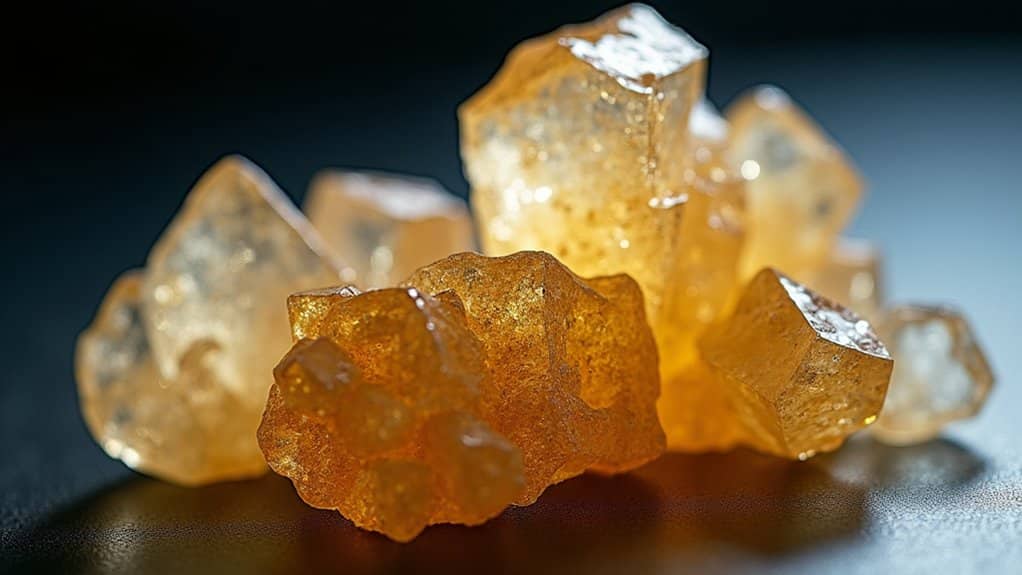
This explains what is freebase crack, it’s cocaine converted to smokable form using an alkaline agent. Is freebase cocaine crack? When made with baking soda rather than ammonia, the product is specifically called crack cocaine. The baking soda process removes hydrochloride from the cocaine, creating the freebase form. The resulting rocks appear white or off-white and vary in size and shape. The name “crack” itself originates from the crackling sound produced when the cocaine and impurities are heated during smoking.
Why Do Freebase and Crack Produce a Stronger High?
Understanding how crack forms explains what it is, but the production method also reveals why smoking it produces such intense effects. When you smoke cocaine freebase vs crack, both vaporize at low temperatures around 98°C, allowing direct lung absorption. This bypasses liver metabolism and delivers the drug to your brain within seconds.
The pharmacokinetic differences are significant. Smoking achieves nearly 100% bioavailability compared to 30-60% when snorting powder cocaine. Peak blood levels reach 2-3 times higher than equivalent snorted doses. This rapid surge floods your brain’s reward pathways, producing an intense euphoric rush lasting 5-10 minutes.
The lipophilic base form crosses the blood-brain barrier more efficiently, amplifying dopamine release. This concentrated delivery explains why both forms carry heightened overdose risk and stronger addiction potential than powder cocaine.
Which Form Is Most Addictive and Dangerous?
Because both freebase and crack deliver cocaine rapidly to the brain, they carry similar addiction and overdose risks that exceed those of powder cocaine. When comparing crack cocaine vs freebase, you’ll find both forms produce intense cravings and rapid tolerance buildup.
The key dangers you face with either form include:
- Higher overdose potential, The purity of smoked cocaine increases dosing errors and sudden toxic effects.
- Accelerated addiction development, Rapid brain delivery creates stronger psychological dependence than powder cocaine.
- Compounded risks, Combining either form with alcohol or other substances dramatically increases overdose likelihood.
You should understand that neither form is meaningfully “safer.” Both cause severe cardiovascular complications, respiratory damage, and mental health effects including paranoia and hallucinations with continued use.
Why Did Crack Replace Freebase in the 1980s?
Beyond the pharmacological risks both forms share, historical and economic factors explain why crack largely displaced freebase by the mid-1980s. Freebasing crack’s predecessor required expensive, volatile solvents like ether, which caused explosions and severe burns. When dealers discovered they could achieve similar results using baking soda, they eliminated these dangers while dramatically reducing costs. This shift in production methods also led to an increase in the availability of freebasing drug use definition among users, who were drawn to its perceived lower risk and cost. As freebase became more accessible, it contributed to an evolving drug culture that favored speed and convenience. Ultimately, these changes laid the groundwork for the widespread normalization of freebasing practices that would follow in the ensuing decades.
| Factor | Freebase vs Crack |
|---|---|
| Production Cost | Expensive solvents vs cheap baking soda |
| Safety Risk | High explosion danger vs minimal risk |
| Target Market | Affluent users vs low-income communities |
| Peak Period | 1970s-early 1980s vs mid-1980s onward |
You’ll notice crack’s simpler preparation method enabled rapid, widespread distribution in urban areas. By 1985, crack had penetrated communities previously untouched by freebasing, fundamentally shifting cocaine’s demographic reach.
Are Freebase and Crack Really the Same Drug?
At their core, freebase and crack are chemically identical, both contain cocaine in its base form, stripped of the hydrochloride salt found in powder cocaine. You’re consuming the same active compound regardless of which version you use.
Freebase and crack deliver the same cocaine base compound, only the preparation method differs between these two forms.
The distinction lies in production methods:
- Freebase requires ether extraction, yielding nearly pure cocaine base
- Crack uses baking soda and water, creating solid rocks with residual impurities
- Free basing crack involves the same smoking mechanism, delivering rapid effects to your brain
Both substances vaporize at approximately 98°C and produce intense, short-lived highs lasting 10-15 minutes. The physiological effects remain consistent across both forms. When you’re free basing crack or smoking traditional freebase, you’re experiencing cocaine’s base form through different preparation pathways rather than fundamentally different drugs.
Recovery isn’t about waiting for the right time; it’s about making this moment count. Miami Detox Center pairs you with Miami’s most understanding treatment providers who know that overcoming addiction takes courage and the right support. Whether you need safe cocaine detox with clinical oversight, the immersion of full-time residential programs, outpatient care that adapts to your schedule, or the strength of continuous recovery guidance, we’ll help you find your path forward. The person you want to become is waiting on the other side of this call. Dial (786) 228-8884 and let’s start your transformation today.
Frequently Asked Questions
Can Freebase or Crack Cocaine Be Detected Differently in Drug Tests?
Yes, drug tests can detect crack and freebase cocaine differently from powder cocaine. When you smoke these forms, your body produces unique pyrolysis byproducts, anhydroecgonine methylester (AEME) and ecgonidine (ECD), that don’t appear with snorted or injected cocaine. GC/MS testing can identify AEME in your urine up to 18 hours after smoking. However, standard drug screens typically detect benzoylecgonine without distinguishing how you used cocaine.
What Does Crack Cocaine Smell Like When It Is Smoked?
When smoked, crack cocaine produces a harsh, acrid odor often compared to burning plastic or rubber. You’ll notice strong chemical notes with a distinctly burnt, sweet plastic quality. The smell can include ammonia undertones from the production process. Additives and impurities may create additional scents like rotten eggs, gasoline, or nail polish. This pungent smoke clings to clothes, furniture, and walls, lingering long after use and remaining easily detectable in enclosed spaces.
How Long Do the Effects of Smoking Crack or Freebase Last?
When you smoke crack or freebase cocaine, the high typically lasts just 5-10 minutes. You’ll experience peak euphoria within seconds of inhaling, but the effects diminish rapidly. This short duration often leads to repeated use as cravings develop quickly once the high fades. After the initial rush, you may experience anxiety or paranoia. The drug’s half-life is approximately 15 minutes, explaining why effects wear off so quickly.
Is It Possible to Reverse Crack Cocaine Back Into Powder Form?
Yes, you can reverse crack cocaine back into powder form. By adding an acid like citric or ascorbic acid to crack, you’ll convert the free base back into a water-soluble hydrochloride salt, essentially powder cocaine. However, this process isn’t commonly done in practice. Street crack often contains cutting agents that complicate clean reversal, and the resulting powder may have impurities introduced during the original conversion process.
Why Is Crack Cocaine Typically Sold in Smaller, Cheaper Amounts?
Crack cocaine is typically sold in smaller amounts because it appeals to users who want immediate, affordable access. Dealers package it in rocks priced as low as $3 to $35, making it accessible to people with limited funds. This approach increases transaction volume and maximizes profits. You’ll find that crack’s addictive properties drive frequent purchases, so selling small units meets user demand while allowing dealers to fund their own drug use.