





During outpatient detox, you’ll initially visit daily for medical monitoring and medication management during acute withdrawal. Your schedule typically starts with 5-6 hours per day in Partial Hospitalization Programs (PHP), then shifts to 3 days per week in Intensive Outpatient Programs (IOP) as you stabilize. Visit frequency decreases from biweekly to monthly check-ins over 24 weeks, with adjustments based on your progress. Understanding the full treatment timeline can help you plan for long-term recovery success.
Initial Assessment and Visit Schedule Planning

While initiating outpatient detox treatment, a thorough initial assessment forms the cornerstone of effective care planning. You’ll undergo an extensive evaluation that includes substance use history, mental health screening, and medical background review. During this process, privacy and confidentiality are strictly maintained in accordance with healthcare regulations. Co-occurring disorders are carefully evaluated to ensure comprehensive treatment delivery. This 1-2 hour assessment helps determine your specific treatment needs and potential complications. The assessment enables clinicians to create a highly personalized plan that aligns with your recovery goals.
Your visit schedule will be tailored to your individual circumstances. You’ll typically start with weekly visits during early treatment phases, which may include urgent care access for managing withdrawal symptoms. If you’re participating in intensive outpatient therapy, your medical appointments will be coordinated with counseling sessions. As you progress and show stability, your visit frequency may decrease to biweekly sessions. The schedule remains flexible, adjusting based on your recovery progress and risk factors.
Daily Monitoring During Acute Withdrawal
During the acute withdrawal phase, you’ll undergo thorough daily monitoring to guarantee your safety and track symptom progression. Healthcare professionals will assess your essential signs, including blood pressure and pulse rate, at each visit while checking your hydration levels and nutritional intake. Benzodiazepines are prescribed as the primary medication for managing moderate to severe withdrawal symptoms during outpatient detox. Support persons monitor progress between clinical visits to enhance successful recovery outcomes. The typical withdrawal duration period ranges from 2-5 days for most patients.
Your mental status and cognitive function will be evaluated using validated tools like the Self-Assessment Withdrawal Scale. You’ll receive face-to-face assessments for up to five days after your last drink, though some visits may alternate with telemedicine. If your withdrawal symptoms worsen, the frequency of evaluations may increase.
Should you experience severe symptoms like seizures, persistent vomiting, or unstable essential signs, you’ll be immediately transferred to inpatient care. The monitoring continues until your withdrawal symptoms resolve or specific complications require specialized intervention.
Medication Management and Dosing Appointments
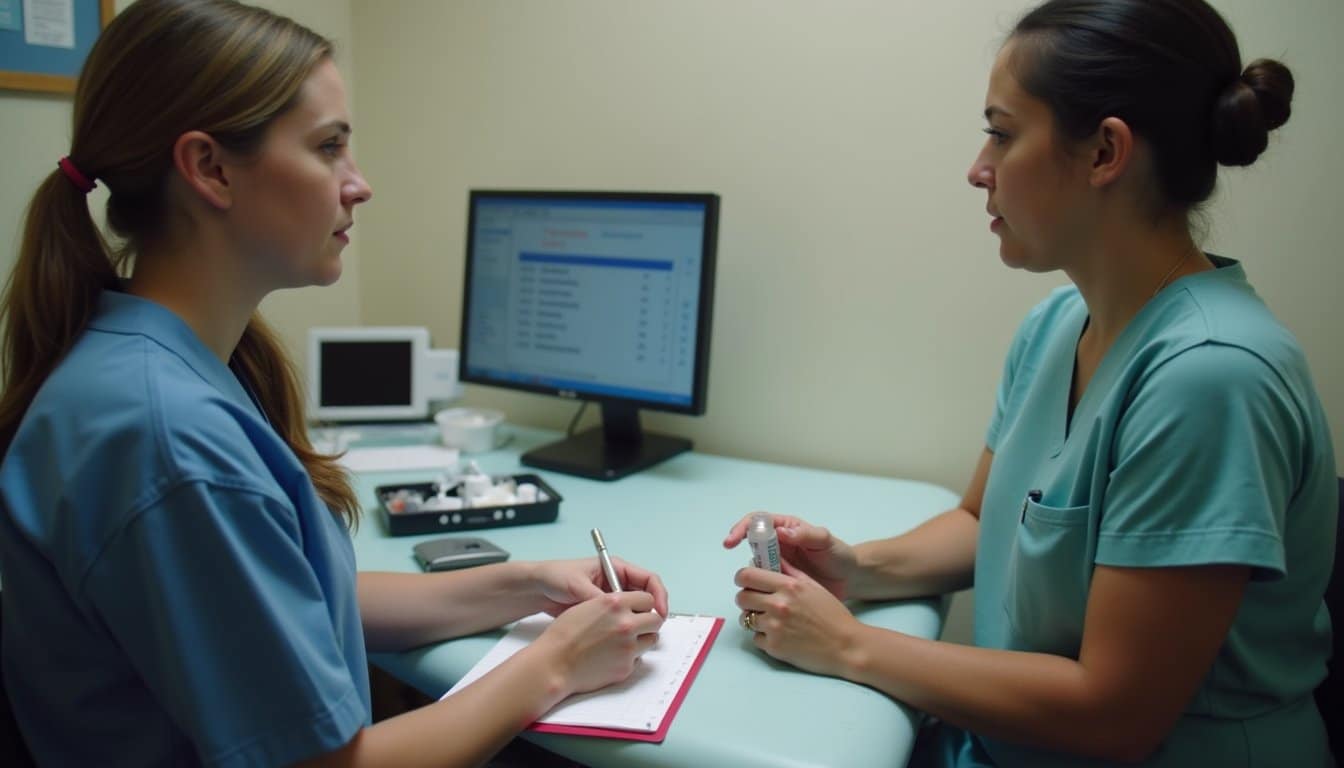
Medication management for outpatient alcohol detox follows precise, evidence-based protocols with structured dosing schedules. You’ll receive carefully monitored medication adjustments during the first 72 hours, when withdrawal risks peak. Your visits will align with specific dosing protocols, for example, you’ll start with diazepam 10 mg every 6 hours on Day 1, tapering to bedtime doses by Day 4. Having a stable home environment is essential for successful outpatient medication management.
During each visit, your healthcare provider will assess your symptoms using standardized tools like SAWS or CIWA-Ar to guide any necessary dose modifications. They’ll check your essential signs and may order lab work to monitor your liver function and blood counts. If you’re experiencing severe symptoms or complications, your provider may adjust your dosing schedule or shift you to inpatient care for more intensive monitoring. You’ll also receive important nutritional supplements including thiamine 100 mg daily to support your recovery.
Transitioning to Less Frequent Visits
As you progress through outpatient detox treatment, your visit frequency will typically decrease from daily appointments to a less intensive schedule based on your stability and recovery milestones. You’ll notice this change beginning once you’ve demonstrated consistent medication compliance, maintained sobriety benchmarks, and established reliable support systems outside the clinic. Many patients transition into intensive outpatient programs that provide structured ongoing care while allowing more flexibility. Treatment includes individual therapy sessions alongside medication management for comprehensive recovery support. Your medication management will shift from frequent monitoring to maintenance-level oversight, with your healthcare team adjusting dosages and scheduling follow-ups according to your individual response and risk assessment. Research shows that follow-up assessments are commonly scheduled at 2, 8, 16, and 24 weeks after initial detoxification to monitor patient progress.
Decreasing Visit Schedule Pattern
The shift to less frequent outpatient detox visits follows a structured protocol that adapts to each patient’s stability and progress. You’ll typically start with daily visits during the first week, as your medical team closely monitors withdrawal symptoms and medication responses. Visit frequency gradually decreases from 5 days per week in Partial Hospitalization (PHP) to 3 days weekly in Intensive Outpatient (IOP). Studies show that sustained treatment participation of 3 months or longer leads to the most successful outcomes in maintaining sobriety.
As you demonstrate consistent stability through symptom remission and treatment adherence, you’ll move to standard outpatient care with 1-2 visits per week. Your schedule adjustments depend on several factors, including medication tapering progress, therapy engagement, and functional improvements in daily life. A comprehensive treatment plan, developed with input from both you and your healthcare providers, guides the timing of these transitions. Virtual care options may supplement in-person visits during later stages, offering flexibility while maintaining clinical oversight. Due to security measures implemented on the treatment facility’s website, patients should maintain offline contact information for their care team to ensure uninterrupted access to schedule changes.
Stabilization Signs and Milestones
Moving from daily visits to less frequent check-ins requires clear evidence of your stabilization progress. Key stabilization indicators include achieving medical stability through normalized essential signs, controlled withdrawal symptoms, and successful medication management. You’ll need to demonstrate consistent therapy engagement through active participation in counseling sessions and peer support groups. Understanding that post-detox cravings can persist for months after initial stabilization helps set realistic expectations for the transition timeline. Evidence-based therapies like cognitive-behavioral therapy and dialectical behavior therapy are essential components of comprehensive addiction treatment during this phase.
Your healthcare team will assess specific milestones, including your ability to self-monitor symptoms, manage Post-Acute Withdrawal Syndrome (PAWS), and implement relapse prevention strategies. They’ll look for improvements in your sleep patterns, cognitive function, and emotional stability. You must also show increased personal responsibility by independently following your treatment plan, attending scheduled appointments, and effectively addressing triggers. These achievements collectively signal your readiness for reduced visit frequency.
Managing Medication Step-Down Process
Successfully shifting to reduced visit frequency requires careful management of your medication step-down process. Your healthcare provider will implement medication adjustments based on proven titration protocols, typically starting with frequent doses every 2-4 hours before extending intervals to 6-8 hours as your symptoms stabilize.
For medications like chlordiazepoxide, you’ll experience a gradual reduction over 4-7 days. Your patient compliance with the prescribed regimen directly influences how quickly you can move to less frequent visits. Once front-loading phases achieve desired sedation levels, your provider may switch you to longer-acting medications that require fewer check-ins. This strategic approach allows for extended periods between clinical assessments while maintaining therapeutic effectiveness through self-tapering properties of the medications.
Long-Term Treatment Scheduling
Your long-term treatment schedule will typically begin with biweekly visits during weeks 2-8, followed by monthly check-ins through week 16, and conclude with a final assessment at week 24. You’ll receive schedule modifications based on your progress, with successful adherence potentially leading to reduced visit frequency while setbacks may require more intensive monitoring. Treatment completion rates improve when your schedule accounts for specific factors like substance type, demographic considerations, and program accreditation standards.
Recommended Visit Time Frames
While establishing an effective outpatient detox treatment schedule, practitioners typically begin with weekly or multiple weekly visits during the initial stabilization phase. Your visit frequency will align with specific treatment goals, including withdrawal management and risk mitigation, with adjustments made as your functional status improves.
You’ll participate in regularly scheduled individual or group sessions that follow standardized protocols, with the initial high-frequency visits ensuring safe monitoring during acute withdrawal. The program permits up to three visits per year without medical justification, while withdrawal management is typically limited to five days unless clinically indicated. You’ll receive ongoing medical supervision with 24-hour monitoring available for withdrawal-related risks. Treatment plans undergo regular reviews to adjust care intensity based on your progress and response to medication management protocols.
Success-Based Schedule Adjustments
Treatment schedules evolve based on measurable progress indicators and clinical assessments throughout the recovery process. Your success strategies directly influence schedule flexibility, with adjustments made to accommodate your recovery journey.
Key schedule modifications include:
- Shift from daily sessions to weekly visits as you demonstrate improved coping skills
- Reduction in therapy intensity from PHP to IOP programs once you’ve achieved stabilization
- Integration of family support sessions and employment commitments into your treatment calendar
- Change to monthly maintenance check-ins after mastering core recovery techniques
As you progress, you’ll experience gradually decreased structured programming while maintaining essential support systems. Your counselor will collaborate with you to adjust session frequencies based on symptom tracking, stress levels, and overall recovery stability. Treatment duration may extend beyond 12 months depending on your individual needs and relapse prevention requirements.
Factors That Determine Visit Frequency

Multiple interconnected factors influence the frequency of outpatient detox visits, ranging from program structure to individual patient circumstances. Your treatment intensity level whether PHP or IOP establishes the baseline visit schedule, while your personal obligations and support network affect visit consistency. Transportation access and facility proximity can create attendance barriers that impact how often you’ll need to visit.
Your insurance coverage, previous treatment history, and the program’s accreditation requirements also shape your visit frequency. If you’re in a PHP program, you’ll typically attend 5-6 hours daily, while IOP allows more flexibility with 3-hour sessions 3-5 times weekly. The program will adjust your schedule based on your progress, gradually reducing visit frequency as you demonstrate stability and meet treatment milestones.
Urban Vs Rural Program Differences
Notable disparities exist between urban and rural outpatient detox programs across key operational dimensions. Treatment accessibility and delivery vary considerably based on geographic location, with notable capacity differences and resource disparities impacting visit frequency.
- Urban programs offer more intensive treatment structures with 15-25 weekly visit hours, while rural programs typically provide 6-12 hours due to staffing limitations.
- Geographic accessibility favors urban patients with shorter travel distances and public transportation options.
- Resource disparities show urban facilities maintaining multidisciplinary teams and broader insurance networks compared to rural programs’ limited specialized staff.
- Treatment structure variations reveal urban centers implementing phased care models with stricter attendance monitoring, while rural programs often default to single-level treatment with relaxed requirements.
The urban-rural divide markedly influences your potential visit frequency and overall treatment experience.
Success Rates and Visit Patterns
While success rates in outpatient detox programs vary widely, consistent visit patterns emerge as a critical factor in recovery outcomes. You’ll find that maintaining regular attendance markedly improves your chances of success, with 52% of patients completing their programs when following prescribed visit schedules. Research shows you’re more likely to achieve sobriety when you maintain consistent visits, as evidenced by 76% abstinence rates at three months.
Your visit frequency will typically decrease as you progress through treatment. Initially, you’ll need more frequent visits, especially during detox phases. Programs for different substances require varying attendance levels opioid treatment demands stricter schedules, while alcohol and marijuana programs show success rates of 45% and 36%, respectively. Telemedicine options now allow for daily check-ins without in-person visits, improving your treatment accessibility.
Building a Sustainable Recovery Schedule
Creating a sustainable recovery schedule requires careful integration of medical supervision, therapy sessions, and support systems within your outpatient detox treatment. Your success depends on establishing consistent recovery habits while maintaining flexibility for medication adjustments and therapeutic interventions.
- Attend structured group sessions multiple times weekly, combining them with 1-2 individual therapy visits to address your personal triggers and challenges
- Participate in medication check-ins every 4-6 hours during initial detox, allowing for crucial sign monitoring and dosage adjustments
- Engage your support network through family education sessions and peer support programs to strengthen your recovery foundation
- Complete weekly trigger analysis and stress management workshops to develop effective coping strategies and prevent relapse
Your commitment to this schedule guarantees thorough care while maintaining daily responsibilities in an outpatient setting.
Reclaiming your life from addiction shouldn’t cost you your livelihood. When you’re ready to seek help but can’t afford to step away from work, Outpatient Detox Miami is here to guide you. We connect working professionals throughout Miami with treatment providers who get it recovery needs to fit into real life, not replace it. Let us find you flexible care options that honor both your healing journey and your professional responsibilities. Your career doesn’t have to pause for your recovery to begin, call us today at (786) 228-8884 and we’ll help you find a solution that works for both.
Frequently Asked Questions
Can I Continue Working While Attending Outpatient Detox Visits?
You can continue working during outpatient detox, particularly through Intensive Outpatient Programs (IOP) that offer treatment flexibility around your work schedule. While Partial Hospitalization Programs (PHP) require full-time commitment, IOPs provide 3-hour sessions 3-5 days weekly, often during evening hours. Your ability to work depends on the program’s intensity level and your job’s demands. Many treatment centers specifically design their schedules to accommodate working professionals.
What Happens if I Miss a Scheduled Detox Appointment?
Missing scheduled detox appointments can seriously impact your recovery progress. You’ll face increased relapse risks and disrupted treatment continuity. Your facility will likely contact you about appointment rescheduling, but repeated missed appointments may affect your treatment status or extend your program duration. To stay on track, immediately notify your treatment team if you can’t make a session. Many facilities offer makeup sessions or alternative scheduling options to maintain your recovery momentum.
Are Weekend or Evening Appointments Available for Outpatient Detox Visits?
Evening availability and weekend scheduling options vary by treatment facility. While most outpatient detox programs operate during standard weekday hours, some centers offer flexible scheduling to accommodate work and family commitments. You’ll need to check directly with your local treatment providers, as extended hours depend on staffing resources and program design. Keep in mind that insurance coverage for non-standard appointment times may require additional authorization from your provider.
Do I Need a Designated Driver for Outpatient Detox Appointments?
You’ll need to discuss transportation options with your treatment provider, as requirements vary by program and medication protocols. While specific policies about designated drivers aren’t universal, it’s important to plan reliable transportation for your appointments. Some medications used in detox may cause drowsiness or impair driving ability. Your provider will advise you on safety precautions and whether you’ll need someone to drive you to and from appointments.
How Much Does Each Outpatient Detox Visit Typically Cost?
Your outpatient detox visit costs can vary considerably based on several detox pricing factors. Without insurance, you’ll typically find costs ranging from $250-$800 per visit. Insurance coverage options can greatly reduce these expenses, often leaving you with just a copay. The final cost depends on whether you’re receiving medication-assisted treatment, the level of medical supervision required, and your program’s intensity. You’ll want to verify coverage specifics with both your insurance provider and treatment facility.