




THCA diamonds are made of nearly pure crystalline tetrahydrocannabinolic acid, reaching 95-99.9% purity through advanced extraction techniques. You’ll find they’re produced using closed-loop hydrocarbon systems with butane or CO2 solvents, followed by controlled crystallization that takes 5-21 days. During this process, THCA molecules stack into translucent formations while terpenes separate into a viscous liquid. Understanding how these crystals transform into psychoactive THC reveals why consumption methods matter greatly. THCA diamonds are made of nearly pure crystalline tetrahydrocannabinolic acid, reaching 95, 99.9% purity through advanced extraction techniques. You’ll find they’re produced using closed-loop hydrocarbon systems with butane or CO₂ solvents, followed by controlled crystallization that takes 5, 21 days. During this process, THCA molecules stack into translucent formations while terpenes separate into a viscous liquid. Understanding does the diamonds get you high clarifies why these crystals must be heated to convert into psychoactive THC, and why consumption methods matter greatly.
What Are THCA Diamonds?
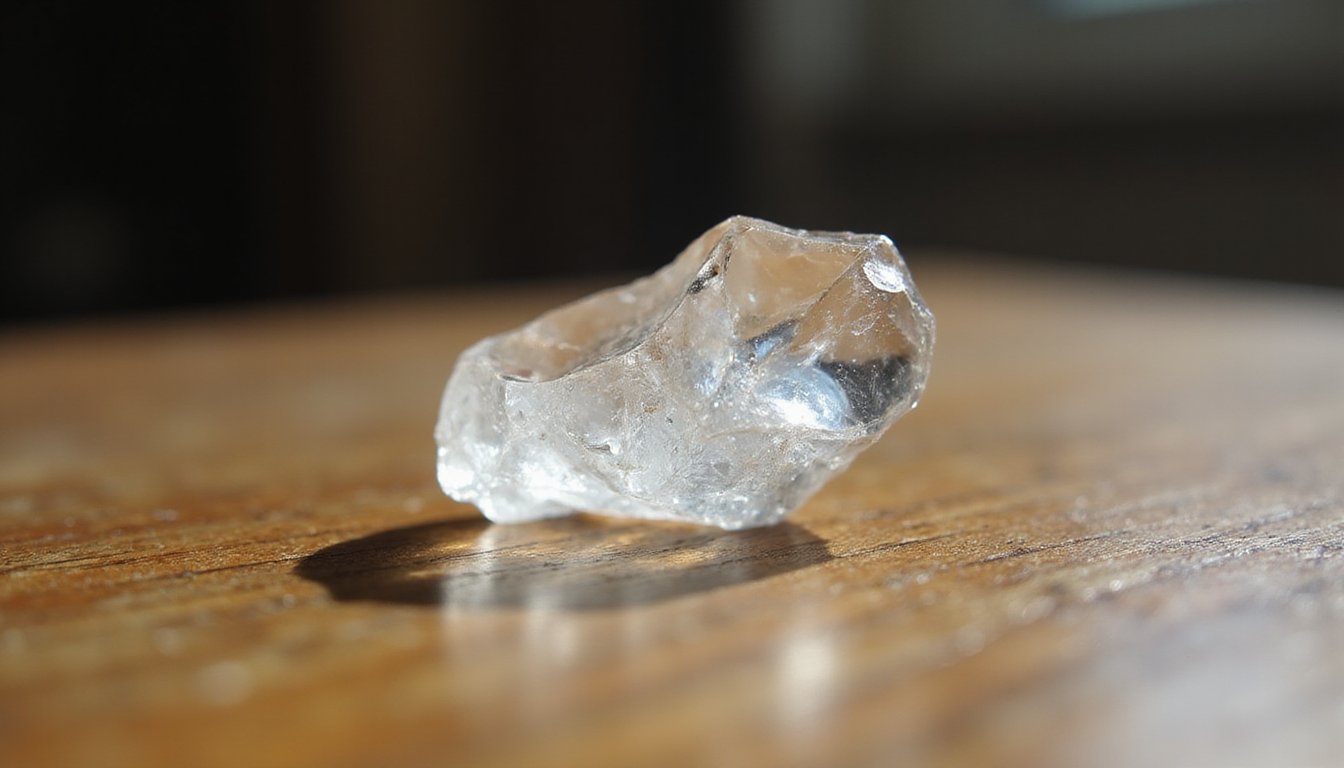
THCA diamonds consist of nearly pure crystalline tetrahydrocannabinolic acid, the non-intoxicating cannabinoid precursor to delta-9-THC. Unlike cannabis flower, which contains dozens of compounds, THCA crystalline represents one of the purest forms of concentrated cannabinoids available, reaching 95, 99.9% purity. THCA diamonds consist of nearly pure crystalline tetrahydrocannabinolic acid, the non-intoxicating cannabinoid precursor to delta-9-THC. Often referred to as thc diamonds cannabis concentrate in industry slang, THCA crystalline represents one of the purest forms of concentrated cannabinoids available, reaching 95, 99.9% purity.
To create this THCA concentrate, extractors use a closed-loop hydrocarbon system to pull cannabinoids from plant material. The resulting extract undergoes chromatography to isolate THCA molecules from impurities. Once purified, the solution becomes supersaturated and crystallizes over days or weeks under controlled conditions. The crystallization process typically takes 5-21 days as THCA molecules slowly stack into translucent formations while terpenes separate into a viscous mother-liquor. Because this process requires precise environmental controls, THCA diamonds cannot be made at home and must be produced in a lab-grade setting.
You’ll recognize these crystalline extracts by their gem-like, faceted appearance that reflects light. The solid, translucent structures form as THCA molecules arrange into an ultra-pure matrix, producing what are now among the most potent cannabis products you can consume. The cold extraction method used in production helps preserve the integrity of cannabinoids and terpenes throughout the process.
Why the “A” in THCA Changes Everything
When you examine the molecular formulas of THCA (C₂₂H₃₀O₄) and THC (C₂₁H₃₀O₂), a single carboxyl group (-COOH) accounts for the entire difference, yet this extra component fundamentally alters how each compound interacts with your body.
THCA functions as a non-psychoactive precursor because its carboxyl group prevents binding to CB1 receptors. Fresh-frozen cannabis preserves this raw state, maintaining purity until you’re ready for conversion. Products reaching 99% THCA deliver exceptional potency levels, but only after decarboxylation occurs. Beyond its role as a THC precursor, preliminary research suggests THCA may offer anti-inflammatory effects potentially beneficial for managing conditions like arthritis and lupus.
When you apply heat through a dab rig, the carboxyl group releases as CO₂, transforming THCA into psychoactive THC. This conversion happens rapidly, enabling immediate CB1 receptor binding and dopamine release. The dramatic shift in effects demands careful dosing, since concentrated diamonds amplify this transformation considerably compared to traditional flower. Unlike THC, which can cause short-term side effects like dizziness and paranoia, THCA in its raw form is generally well-tolerated by most users. Both compounds originate from cannabigerolic acid (CBGA), with the enzyme THCA-synthase catalyzing the initial conversion that creates THCA in the living plant.
How THCA Diamonds Are Made
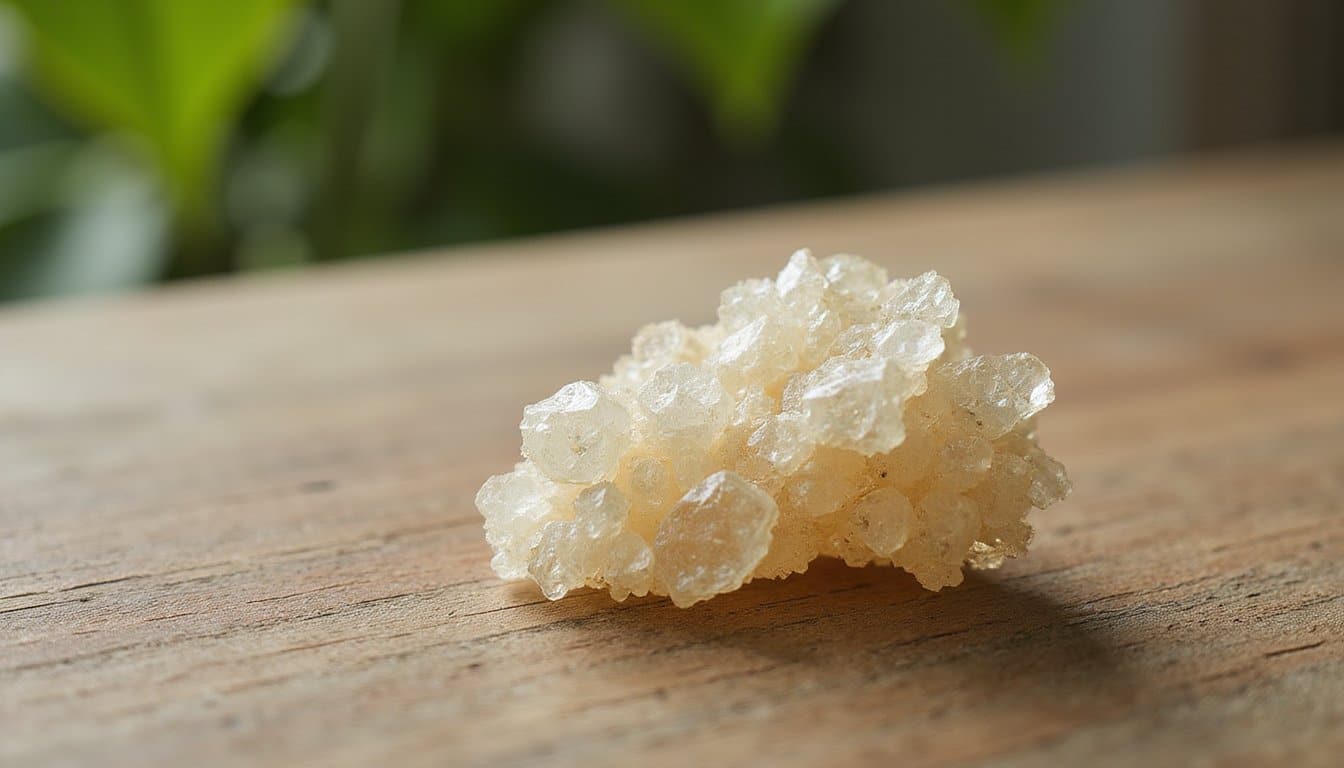
The production of THCA diamonds begins with extracting cannabis concentrate through closed-loop systems using butane or CO2 as solvents. Fresh-frozen material yields live resin, preserving terpene profiles throughout extraction. After purging residual solvent to achieve ideal viscosity, you’ll initiate crystallization using one of several methods.
The controlled crash technique chills warm crude with super-cold propane, forming large diamonds within one to three days. Alternatively, jartech involves maintaining temperatures between 28-30°C in vacuum ovens over 10-20 days, and producers can optionally seed the jar with existing THC diamonds to improve the final crystalline structure. For commercial-scale production, a pressure-rated diamond miner provides precise temperature and pressure control in jacketed stainless steel vessels.
During crystallization, THCA molecules link and precipitate into crystalline structures while terpene sauce separates naturally. You’ll then use a centrifuge or strainer to isolate the finished cannabis concentrates. This process requires specialized equipment and a deep understanding of chemistry to achieve the desired purity levels. The entire crystallization procedure can take several weeks to grow large, clean THCA crystals that meet quality standards.
Why THCA Diamonds Reach 99% Purity
When you examine why THCA diamonds achieve 99% purity, you’ll find the answer lies in advanced extraction and refinement techniques. Closed-loop extraction systems recirculate solvents in a sealed environment, preventing contamination while efficiently separating cannabinoids from plant material. Chromatography then removes remaining impurities by separating compounds based on their molecular structure, isolating THCA crystals from other cannabinoids and terpenes. This meticulous purification process eliminates the terpenes, fats, and other compounds typically found in cannabis extracts, leaving behind almost entirely THC with no extra plant matter. Following extraction, a slow, controlled crystallization process allows THCA molecules to separate from the terpene-rich liquid, forming the distinct gem-like structures that define these premium concentrates. The resulting crystals appear semi-transparent and crystal-like, resembling rough-cut diamonds that showcase their exceptional purity.
Closed-Loop Extraction Process
Because THCA diamonds achieve purity levels exceeding 99%, understanding the closed-loop extraction process reveals why these crystalline concentrates represent the most refined cannabinoid products available.
The extraction process begins when liquid solvents like butane or propane dissolve cannabinoids from plant material within closed-loop systems. This creates a THCA-rich solution that you’ll prepare for crystallization. This sophisticated method requires specialized equipment and expertise to execute properly.
Key stages of diamond formation:
- Supersaturation setup – Residual solvent creates supersaturated conditions where THCA molecules can align
- Slow solvent purging – Controlled heating and vacuum pressure gradually remove solvent over 10-20 days
- Molecular bonding – THCA molecules bond and settle as crystals at container bottoms
You’ll find that slow evaporation rates during crystal formation prevent rapid precipitation, allowing larger diamond structures to develop with exceptional purity. The crystallization process can take several weeks, giving the THCA crystals sufficient time to grow to their full potential. The resulting crystals can be purchased as isolated diamonds or suspended in a sauce-like terpene extract for enhanced flavor profiles.
Chromatography Removes Impurities
Closed-loop extraction produces THCA-rich solutions, but chromatography pushes purity from concentrated to nearly absolute. You’ll find that column chromatography separates THCA from cannabinoids, flavonoids, and impurities by exploiting each compound’s affinity to the stationary phase. Reversed-phase C18 silica filtration purifies THCA after winterization, while flash chromatography isolates the compound with purity exceeding 99%.
| Chromatography Type | Primary Function |
|---|---|
| Column chromatography | Separates THCA from impurities |
| Centrifugal partition chromatography | Uses hexane/methanol/water for yield |
| Reversed-phase flash | Handles non-winterized extracts |
| Flash chromatography | Achieves 99%+ purity |
During gradient elution, CBD elutes first while THCA follows later. Mobile phases including toluene, hexane, and acetone drive separation. Liquid-liquid extraction often precedes chromatography to pre-isolate THCA, streamlining the final purification process. The resulting THCA isolate appears as a crystalline, white powder with a coarse salt-like texture that reflects its exceptional chemical purity.
THCA Diamonds vs. THC Diamonds
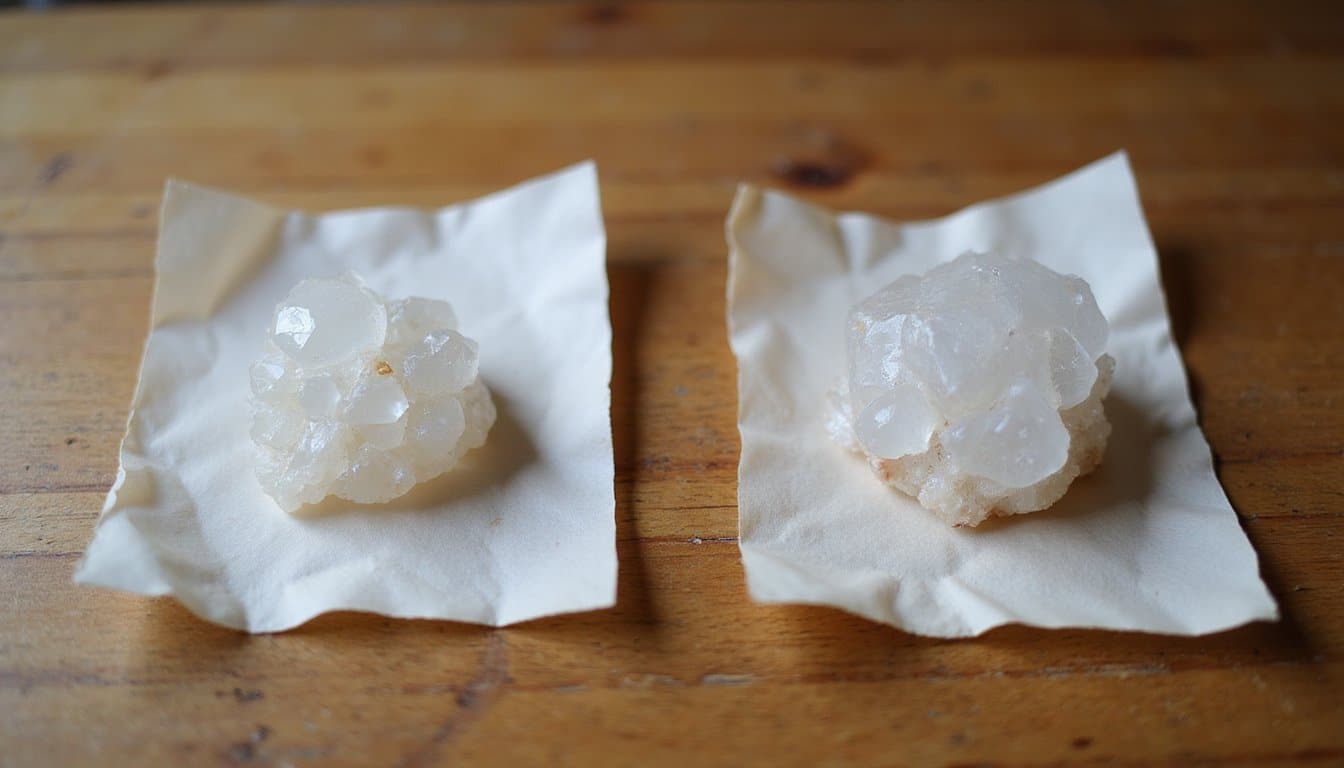
Although the terms “THCA diamonds” and “THC diamonds” often appear interchangeably in cannabis markets, they represent distinct chemical states with different properties and effects. THCA diamonds contain crystalline THCA extracted from cured cannabis, forming translucent, gem-like solids testing at 98, 99.9% purity. When heated through dabbing or vaporization, THCA converts to delta-9-THC, producing psychoactive effects.
THCA diamonds test at 98, 99.9% purity and require heat to convert into psychoactive delta-9-THC.
THC diamonds represent the decarboxylated form, already converted and ready for immediate consumption. THC diamonds represent the decarboxylated form, already converted and ready for immediate consumption a key distinction often discussed in liquid diamonds vs the diamonds comparisons.
Key distinctions between these concentrates:
- THCA diamonds require heat activation to become psychoactive, while THC diamonds deliver instant effects
- Both appear as translucent crystalline structures but differ in molecular composition
- THCA diamonds dominate commercial markets since decarboxylation occurs naturally during consumption
You’ll find most products labeled as “THC diamonds” actually contain THCA awaiting thermal conversion.
How to Use THCA Diamonds
Knowing the chemical distinction between THCA and THC diamonds directly informs how you’ll consume them, since THCA requires heat activation to produce psychoactive effects.
The most effective consumption methods involve direct heat application. You can use a dab rig heated to 500-700°F, which delivers immediate effects with maximum potency. Alternatively, vape pens and vaporizers designed for concentrate offer portable options with controlled temperatures that preserve terpene profiles.
For enhanced flower experiences, crush diamonds and sprinkle them onto joints or bowls, though you’ll want to carefully manage your dose given the high concentration levels.
If you prefer edible infusions, you must complete decarboxylation first by heating the THCA to convert it into psychoactive THC. This method produces slower, more prolonged effects compared to inhalation techniques.
Struggling with cannabis addiction can feel isolating and overwhelming, but you do not have to face it alone because help is closer than you think. At Miami Outpatient Detox, we connect you with trusted cannabis detox services to help you find the care you deserve. Call (786) 228-8884 today and let us help you reclaim the life you deserve.
Frequently Asked Questions
Do THCA Diamonds Have a Smell or Taste on Their Own?
Pure THCA diamonds have virtually no smell or taste on their own. When you’re handling these crystals at 95, 99% purity, you’re working with an isolated cannabinoid that’s been separated from the terpenes responsible for cannabis’s characteristic aromas and flavors. The crystalline structure appears water-clear to pale yellow, indicating minimal contaminants. If you want flavor, you’ll need to add terpenes back post-crystallization or combine diamonds with terpene-rich sauce.
How Should THCA Diamonds Be Stored to Maintain Potency?
You should store THCA diamonds in airtight glass or silicone containers, preferably UV-protected or amber-tinted to block light degradation. Keep them at 54, 70°F for short-term storage, or vacuum-seal and refrigerate for longer periods. You’ll want to maintain 55, 62% relative humidity to prevent mold while avoiding moisture condensation. Don’t open cold containers until they’ve reached room temperature, and limit how often you expose them to air to reduce oxidation.
Can THCA Diamonds Expire or Degrade Over Time?
Yes, THCA diamonds can degrade over time, though they’re remarkably stable compared to other concentrates. Pure diamonds maintain 90%+ potency for 1-2 years under proper conditions. You’ll notice degradation through color changes like yellowing, diminished effects, or altered consistency. Heat, light, and air exposure accelerate cannabinoid conversion and terpene evaporation. Diamonds with sauce degrade faster, within 6-12 months, due to volatile terpene components losing aroma and flavor.
Are THCA Diamonds Legal in All States?
No, THCA diamonds aren’t legal in all states. While federal law permits hemp-derived THCA diamonds containing under 0.3% Delta-9 THC, state regulations vary considerably. You’ll find them legal in many states for adults over 21, but states like Idaho, Hawaii, and Arkansas impose bans or restrictions. Some states calculate total THC by combining THCA and THC content, which affects legality. You should verify your state’s specific laws before purchasing.
What Is the Typical Cost of THCA Diamonds per Gram?
You’ll typically pay a premium for THCA diamonds compared to other concentrates. The complex extraction and crystallization processes drive costs higher than shatter, crumble, or isolates. With purity levels exceeding 99% THCA, you’re getting a vastly more potent product than flower’s 20-30% THCA content. Prices vary based on whether you’re purchasing pure diamonds or diamonds paired with terpene sauce, which adds flavor but increases the per-gram cost.