






Your child’s anxiety stems from multiple interconnected factors: genetic predisposition (30-54% heritable), brain chemistry differences affecting threat response, and temperamental traits like high reactivity. Environmental stressors, including poverty, family dysfunction, overcontrolling parenting, and insecure attachment, significantly increase risk. Modern triggers like cyberbullying, social media comparison, and academic pressure compound these vulnerabilities, with rates climbing from 7.1% in 2016 to 10.6% in 2022. The pandemic further intensified these challenges through isolation and disrupted routines. Understanding these causes empowers you to recognize early warning signs and implement targeted support strategies.
The Growing Prevalence of Childhood Anxiety: What Parents Need to Know

Childhood anxiety has taken hold across communities worldwide, with diagnoses climbing at an alarming pace. Between 2016 and 2022, U.S. rates jumped from 7.1% to 10.6%, and by 2025, more than one in five school-aged children met diagnostic criteria. Globally, 20.5% of youth now experience anxiety symptoms, making it the most common mental health concern in young people.
Girls face higher rates than boys, and LGBTQ+ youth show even greater prevalence, with nearly 70% reporting significant distress. The connection between parenting and anxiety in children is clear, household instability and parental mental health strongly influence risk. In 2020, 1 in 12 kids lived with someone with a mental illness, representing a 5.5% increase compared to 2016. The pandemic intensified these challenges, with widespread isolation and trauma disrupting normal development and support systems for vulnerable youth. This deterioration appears specific to mental health, as physical health conditions like asthma and severe headaches actually decreased during the same period. Unfortunately, access to care hasn’t kept pace with rising need, leaving many families struggling to find timely support despite the growing crisis.
Genetic Predisposition and Brain Chemistry: The Biological Foundation
While no child is destined to develop anxiety, some arrive in the world with a biological vulnerability that shapes how their brain responds to stress and uncertainty. Research reveals that genetic causes of anxiety children experience include dozens to hundreds of interacting genes, not a single “anxiety gene.” If you have an anxiety disorder, your child faces up to seven times higher risk of developing anxiety themselves, with heritability averaging 30-54% across childhood.
The biological causes of anxiety in children also involve neurobiology and brain chemistry differences:
| Brain Region | Function | Impact When Altered |
|---|---|---|
| Amygdala | Fear processing | Heightened threat response |
| Prefrontal cortex | Emotion regulation | Difficulty controlling worry |
| Neurotransmitters | Mood stability | Increased anxiety symptoms |
Genetics load the gun, but environment pulls the trigger. Anxiety disorders affect approximately one in five Americans annually, making them among the most common mental health conditions impacting families today. Twin studies have confirmed that both genetic and environmental factors work together to influence how anxiety develops and persists in children. Studies examining anxiety-related behaviours show moderate temporal stability from ages 7 to 9, indicating that biological predispositions tend to remain relatively consistent during middle childhood.
Temperament and Personality: Why Some Children Are More Vulnerable
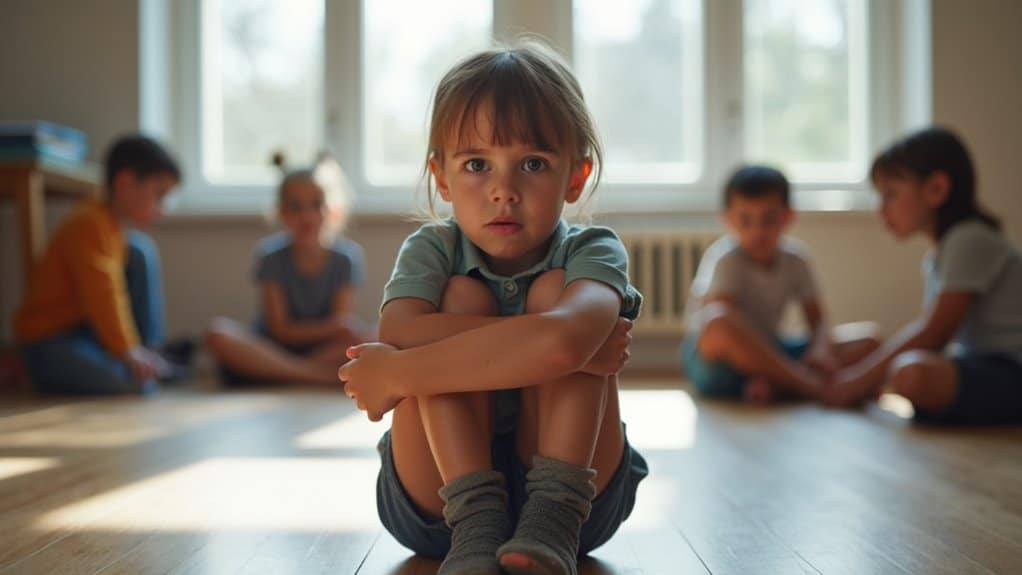
Some children seem born wired for worry, not because they’re destined for anxiety, but because their inborn temperament shapes how intensely they respond to the world around them. Research identifies fearful temperament, marked by high reactivity, shyness, and behavioral avoidance, as a strong predictor of anxiety symptoms. These children develop attention bias in the direction of threatening stimuli, automatically scanning for danger in everyday situations.
Temperament isn’t destiny, though. Your child’s cognitive control skills, particularly their capacity for emotional regulation and attentional control, can either buffer or intensify risk. Children with strong regulation abilities can disrupt automatic threat vigilance, lowering anxiety likelihood. Conversely, those struggling with emotional regulation face heightened vulnerability. Attentional control plays a particularly important role in children’s ability to manage emotions, as this executive function skill helps them maintain focus and regulate their responses to stressful situations. Importantly, not all children with fearful temperament will develop clinical anxiety disorders. These temperamental patterns emerge early in life and remain moderately stable over time, reflecting individual differences rooted in specific neurotransmitter systems. Understanding your child’s temperamental wiring helps you provide targeted support during their most formative years.
The Impact of Poverty and Environmental Stressors on Children’s Mental Health
Economic hardship doesn’t just limit material resources, it fundamentally reshapes the psychological environment in which your child develops. Basic needs deprivation, inadequate food, housing, or heating, creates chronic stress that alters brain development and emotional regulation. Community environmental stressors like violence, overcrowding, and limited access to healthcare compound these effects, triggering lasting neurodevelopmental effects through persistent activation of stress response systems.
Poverty impacts your child’s mental health through:
- Heightened parental stress affecting family functioning and supervision quality
- Chronic activation of stress hormones causing structural brain changes
- Social isolation and shame from economic marginalization
- Cumulative exposure to unsafe neighborhoods and environmental risks
Financial strain also intensifies parental mental health struggles, disrupting attachment and increasing punitive parenting practices, factors directly linked to childhood anxiety and behavioral problems. Research shows that chronic life stress and poverty can lead to decreased grey matter volume in the hippocampus, a brain region critical for emotional regulation. The inadequacy of current social security systems, including benefit caps and increased conditionality, often exacerbates rather than alleviates this parental financial stress. When parents struggle with their own mental health due to financial hardship, this poorer mental health often translates directly to their children, creating an intergenerational cycle of psychological distress.
How Family Dynamics and Parenting Styles Shape Anxiety Risk
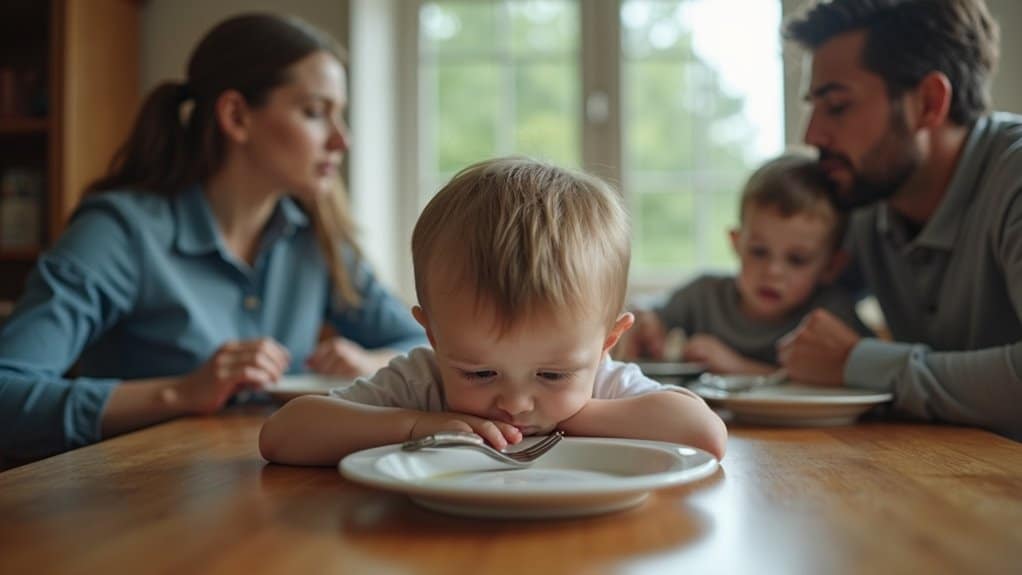
Beyond the external pressures of economic hardship, the emotional climate within your home exerts perhaps the most profound influence on whether your child develops anxiety. Dysfunctional family environments, marked by parental psychopathology, low cohesion, and poor communication, significantly predict anxiety disorders in youth. Your parenting style matters deeply: authoritarian approaches (high control, low warmth) consistently increase anxiety risk, while authoritative parenting (warmth with clear boundaries) offers protection. Parent-child relationships and attachment security are foundational; insecure attachment and parental modeling of anxious behaviors transfer vulnerability to your child. Parental overprotection and excessive control can undermine your child’s sense of autonomy and competence, reinforcing avoidant behaviors that heighten anxiety risk. Family conflict and cohesion directly shape emotional resilience, chronic inter-parental disputes augment anxiety, whereas emotional closeness and adaptability buffer against it. Research indicates that self-esteem mediates the relationship between family functionality and anxiety, meaning that dysfunctional family patterns contribute to lower self-esteem in adolescents, which in turn leads to increased anxiety symptoms. Secure attachment to parents correlates with lower incidence of anxiety and other mental health issues in children. Even bidirectional patterns emerge: your child’s anxiety can intensify parental control, creating feedback loops that sustain distress.
Bullying, Social Media, and Peer Pressure: Modern Social Triggers
Every child navigates a social world, but today’s terrain introduces pressures that previous generations never faced, and these modern triggers profoundly shape your child’s anxiety risk. The constant exposure to social media, coupled with the fear of missing out and the pressure to present a perfect image online, significantly contributes to the causes of social anxiety in kids.
Bullying remains a powerful threat: nearly 30% of bullied teens develop anxiety symptoms, double the rate of non-bullied peers. The impact extends beyond victims; bystanders also show heightened distress. Social media amplifies these harms through cyberbullying, relentless social comparison, and FOMO, creating inescapable harassment that follows children home. Peer pressure to conform intensifies during adolescence, when acceptance feels critical, driving risky behaviors and social withdrawal.
Key social triggers include:
- Cyberbullying that persists 24/7 beyond school grounds
- Curated online identities fueling inadequacy and isolation
- Exclusion and rejection by peer groups
- Disproportionate impact on LGBTQ+ youth and children with disabilities
Recent research tracking 10,000 children found that adolescents who experienced bullying and developed greater interpersonal distrust were 3.5 times more likely to have mental health problems by age 17.
Academic Stress and School Transitions: When Learning Becomes Overwhelming
School-related anxiety stems from multiple overlapping pressures that can transform learning into a source of dread rather than growth. Your child may experience heightened stress from high-stakes testing environments, performance expectations tied to grades, and the significant adjustments required when moving between school levels. These academic triggers often interact with your child’s developmental stage, temperament, and available support systems, making it essential to recognize when normal school challenges cross into overwhelming anxiety.
High-Stakes Testing Pressure
When your child faces a major standardized test, their body experiences a genuine stress response, cortisol levels spike by an average of 15%, triggering symptoms that go far beyond typical nervousness. Over 33% of students now suffer measurable test anxiety, with up to 25% experiencing severe reactions like nausea, panic attacks, and sleeplessness.
This school stress anxiety directly impairs performance. Test pressure reduces working memory capacity, making it harder for your child to demonstrate what they actually know. The consequences extend beyond test day:
- Psychologically, the risk increases: Failing high-stakes exams raises the odds of receiving a psychological diagnosis by 21%
- Academically, performance suffers: Test anxiety correlates enormously with lower reading comprehension
- Self-esteem plummets: Children increasingly view tests as negative experiences marked by fear and inadequacy
- Long-term motivation declines: Relief comes only from completion, not achievement
Transitioning Between School Levels
Moving from one school level to another, whether from preschool to elementary, elementary to middle school, or middle to high school, ranks among the most anxiety-provoking experiences your child will face during their academic expedition. These shifts introduce multiple environmental triggers anxiety children struggle to navigate: larger campuses, complex schedules, unfamiliar peers, and changing teacher relationships. Your child may worry about getting lost, forming new friendships, or encountering older students in shared spaces.
Vulnerable groups face heightened risks, children with special needs, lower socioeconomic backgrounds, or pre-existing shyness often experience prolonged adjustment difficulties. Watch for warning signs: school refusal, stomachaches, sleep disturbances, or social withdrawal. These manifestations reveal your child’s overwhelmed nervous system responding to environmental unpredictability and social restructuring inherent in educational shifts.
Performance Expectations and Grades
Beyond traversing new hallways and unfamiliar faces, your child confronts mounting pressure to perform academically, a stressor that permeates daily school life with relentless intensity. Fear of failure and grades emerges as a primary contributor to anxiety, with examination pressure triggering significant distress. When 74% of adolescents report high academic stress, it’s clear that grade-related concerns aren’t trivial worries, they’re legitimate mental health challenges affecting your child’s well-being.
How performance expectations manifest as anxiety:
- Excessive homework provides marginal academic benefits while amplifying stress, particularly in older students
- Fear of disappointing parents or teachers intensifies self-despondency and worry about meeting expectations
- Competitive classroom environments drive peer comparison, reducing self-esteem and fueling anxiety cycles
- Gender differences reveal girls experience higher workload-related stress while boys struggle more with competitive pressure
The COVID-19 Effect: Understanding Pandemic-Related Anxiety in Children
The pandemic fundamentally altered childhood mental health sceneries across the globe. Your child likely experienced unprecedented disruptions that triggered considerable anxiety responses. Global data reveals a pandemic-induced increase in anxiety prevalence, with rates reaching 18.9% to 23.9% among children and up to 39.9% in adolescents.
Lockdowns, school closures, and social isolation created perfect conditions for anxiety to flourish. Your child’s reduced physical activity, increased screen time, and loss of face-to-face peer interactions intensified emotional struggles. Girls and LGBTQ youth faced particularly heightened risks.
If you’re noticing lingering anxiety in your child, understand that caregiver stress, disrupted routines, and decreased assignment completion during remote learning contributed substantially. These environmental factors interacted with your child’s existing vulnerabilities, creating lasting mental health impacts requiring your compassionate attention.
Recognizing Early Warning Signs and Supporting Your Anxious Child
Understanding pandemic-related anxiety provides pivotal context, but you’ll need practical tools to identify when your child is struggling right now. Watch for persistent sadness lasting beyond two weeks, frequent stomachaches without medical causes, and school avoidance behaviors. Family stress and anxiety often manifest through irritability, emotional outbursts, or withdrawal from previously enjoyed activities.
Early intervention makes a significant difference. Consider these evidence-based strategies:
- Open communication: Create safe spaces for your child to express worries without judgment
- Gradual exposure: Introduce anxiety-provoking situations slowly, building confidence through small successes
- Collaborate with caregivers: Consult teachers and healthcare providers to identify patterns and triggers
- Seek professional help: Don’t hesitate to contact a counselor if anxiety impairs daily functioning
Recognizing these warning signs empowers you to respond effectively.
Something happened. Or maybe nothing specific happened at all and that makes it even harder to understand. Anxiety in children doesn’t always have a clear cause and that uncertainty can leave parents feeling helpless and lost. But understanding what triggers your child is the key to finally being able to reach them. Miami Substance Abuse Treatment helps Miami families uncover the root of their child’s anxiety so they can offer the kind of support that actually makes a difference. Call (786) 228-8884 today. Understanding your child starts with asking the right questions.
Frequently Asked Questions
Can Certain Foods or Dietary Deficiencies Trigger Anxiety in Children?
Yes, certain foods and nutritional gaps can trigger anxiety in your child. Highly processed foods, sugar, caffeine, and refined carbohydrates may worsen anxiety symptoms, while deficiencies in magnesium, zinc, vitamin D, B vitamins, and omega-3s are linked to increased risk. Food allergies themselves can heighten anxiety due to fear of reactions and social stress. You’ll want to focus on whole, nutrient-dense foods and consider a professional dietary assessment if you’re concerned about your child’s nutrition.
At What Age Can Anxiety Disorders First Be Diagnosed in Children?
Anxiety disorders can be diagnosed in children as young as 3 to 5 decades. Separation anxiety and specific phobias often appear earliest, while Generalized Anxiety Disorder typically emerges around decade 5 or later. Some children show symptoms even earlier, OCD has been identified as young as decade 2 to 3. However, formal screening usually begins at decade 8. If you’re noticing persistent worry, clinginess, or behavioral changes in your young child, early evaluation can lead to effective support.
Do Screen Time Limits Help Reduce Anxiety Symptoms in Anxious Children?
Yes, research shows that reducing screen time can markedly improve anxiety symptoms in children. A family-based study found that cutting back on recreational screen use led to meaningful decreases in anxiety and other internalizing symptoms. You’ll likely see the best results if your child currently has high screen exposure. Focus on limiting non-educational screen time to under two hours daily, while encouraging sleep, physical activity, and face-to-face interactions, all protective factors against anxiety.
Can Physical Illnesses or Medical Conditions Cause Anxiety-Like Symptoms in Children?
Yes, physical illnesses can definitely mimic anxiety symptoms in children. Conditions like asthma, thyroid disorders, and low blood sugar can cause racing hearts, sweating, and shakiness that look like anxiety. Chronic pain, sleep disorders, and gastrointestinal issues often produce similar physical complaints. In addition, medications or medical trauma can trigger psychological responses resembling anxiety. Fundamentally, it is crucial to rule out underlying medical causes through proper evaluation before assuming symptoms are purely anxiety-related.
Are Anxiety Disorders in Childhood Likely to Continue Into Adulthood?
Yes, childhood anxiety disorders often persist into adulthood if left untreated. Studies show that anxiety typically begins around youth and follows a chronic course, only 22% of children maintain stable remission after four years. Untreated anxiety markedly increases your child’s risk for adult depression and substance use disorders. However, there’s hope: early intervention with evidence-based therapies like CBT dramatically improves long-term outcomes. Seeking professional support now can prevent lifelong struggles and help your child thrive.