


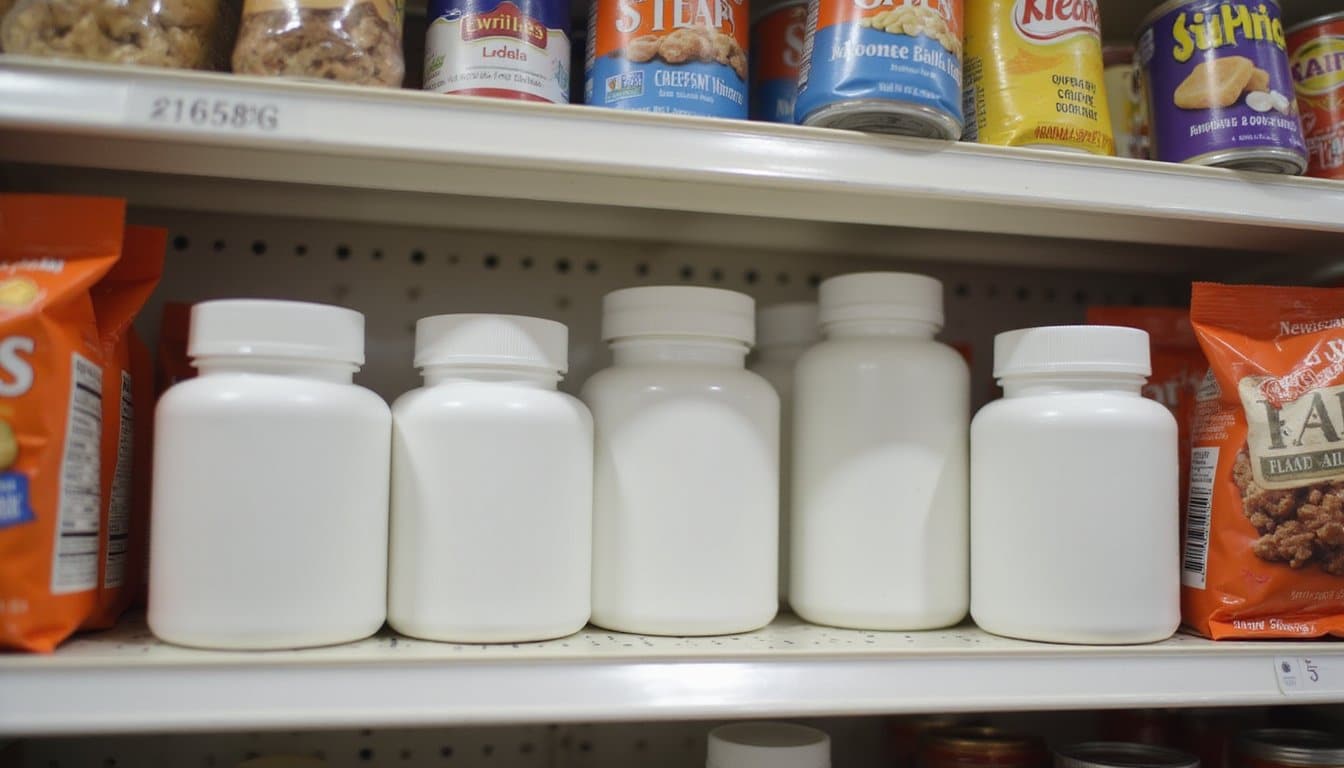

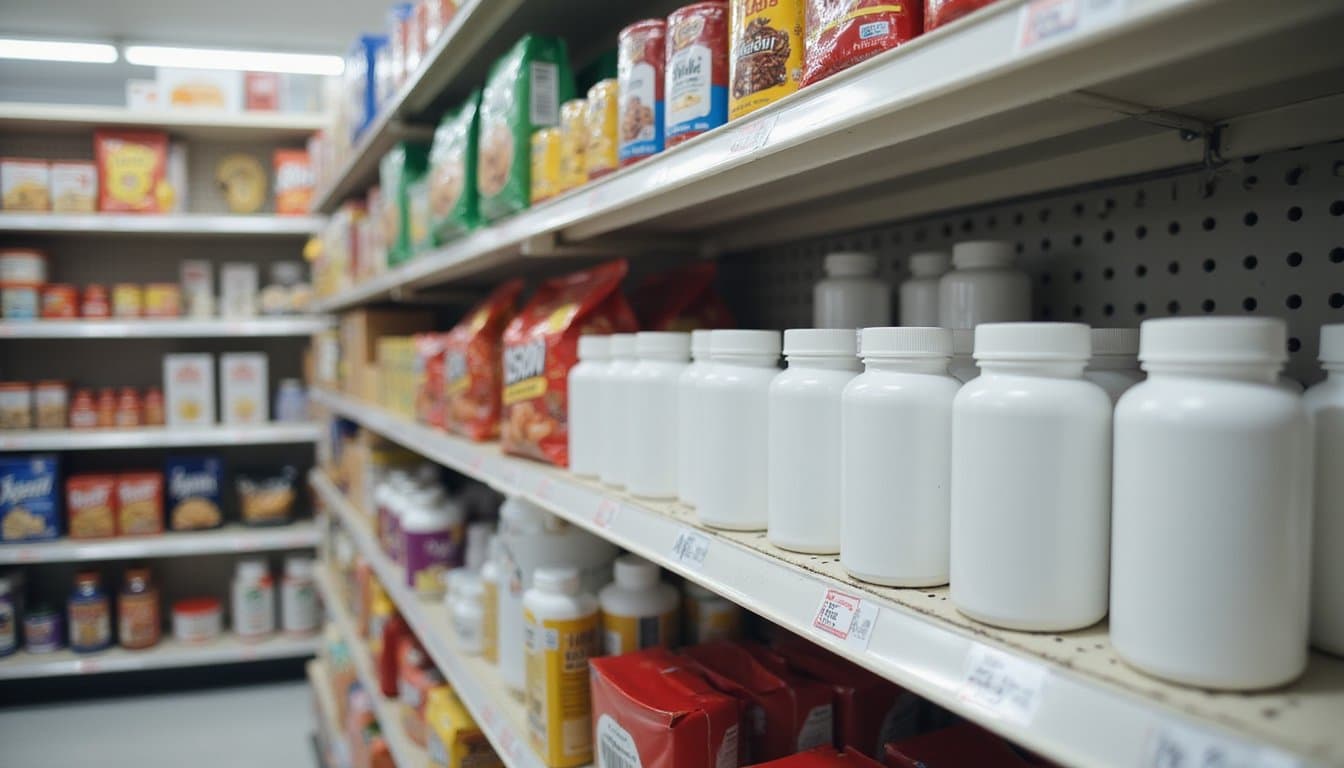
Under the Dietary Supplement Health and Education Act of 1994 (DSHEA), supplements are legally classified as foods, not drugs, so they don’t require FDA pre-market approval. This means manufacturers don’t have to prove safety or efficacy through clinical trials before selling their products. Instead, they’re responsible for self-certifying ingredients and labeling accuracy. The FDA can only act reactively, stepping in after a product reaches shelves. Understanding how this system works can help you make more informed choices.
Why Are Supplements Regulated as Foods, Not Drugs?
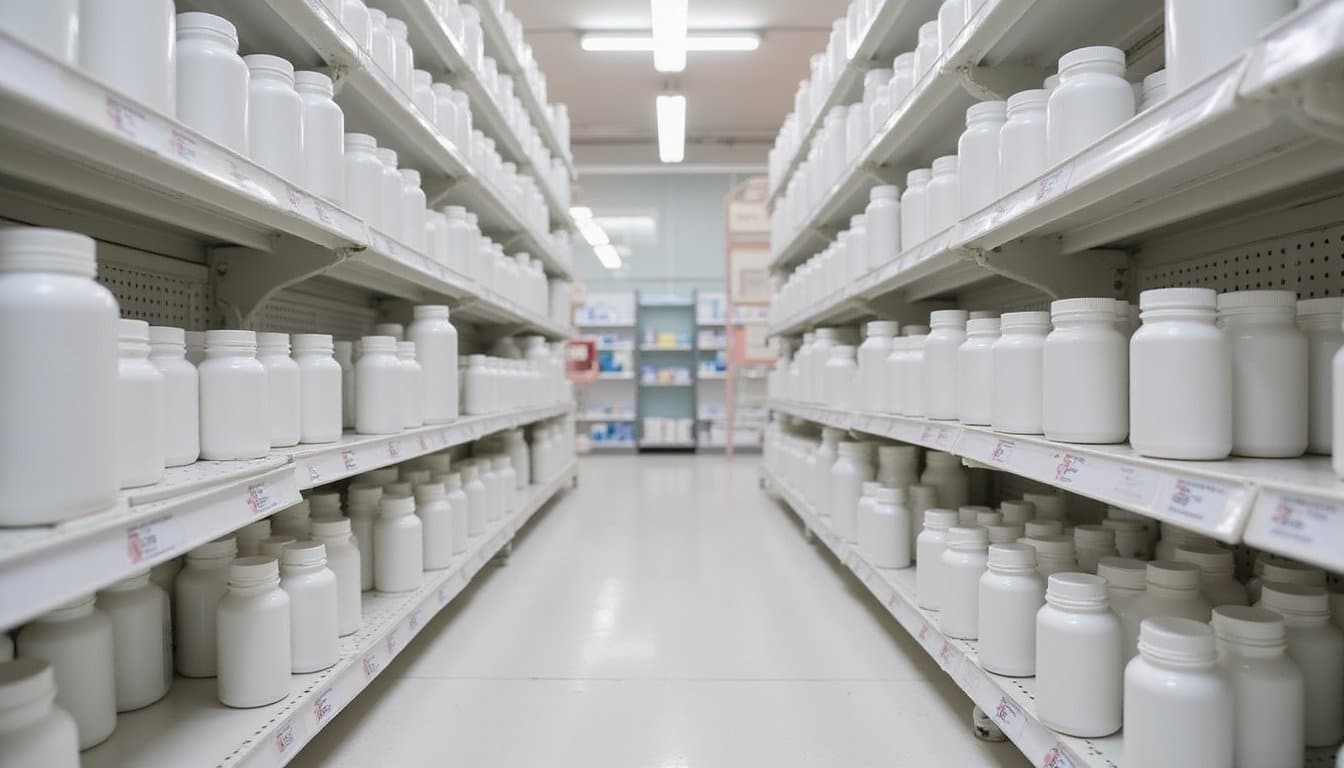
When Congress passed the Dietary Supplement Health and Education Act of 1994 (DSHEA), it classified dietary supplements as a category of food, not drugs. This distinction means dietary supplement regulation in the US doesn’t require manufacturers to prove safety or efficacy before selling products. Unlike drugs, supplements without FDA approval can reach consumers as long as companies self-certify their ingredients and labeling. Additionally, every product sold as a dietary supplement must carry a label stating that the FDA has not evaluated its claims and that it is not intended to diagnose, treat, cure, or prevent any disease.
You’ll find unregulated supplements in stores nationwide because DSHEA shifted pre-market responsibility entirely to manufacturers. Products containing pre-1994 ingredients don’t require any safety evidence submitted to the FDA. New dietary ingredients need a safety notification only 75 days before marketing. If a product makes structure/function claims rather than disease claims, it avoids drug-level scrutiny, requiring only a standard disclaimer on labeling. However, the FDA can still take action against any dietary supplement products that are found to be adulterated or misbranded after they reach the market. Americans spend over $25 billion annually on dietary supplements, many of which reach shelves under this minimal oversight framework.
Who’s Really Responsible for Supplement Safety?
Exactly how does a dietary supplement reach your hands without anyone confirming it’s safe? Under DSHEA, manufacturers, not the FDA, bear primary responsibility for product safety. FDA supplement oversight operates post-market, meaning regulators intervene only after problems surface.
Under DSHEA, no one confirms a supplement is safe before it reaches you, manufacturers self-regulate, and the FDA steps in only after harm occurs.
Here’s how responsibility is actually distributed:
- Manufacturers must guarantee safety, register facilities with the FDA, and report serious adverse events.
- Retailers must avoid making disease treatment claims and keep promotional materials truthful and non-misleading.
- The FDA monitors adverse events, enforces cGMP compliance, and removes products presenting significant or unreasonable risk.
You’re ultimately relying on manufacturers to self-regulate. The FDA can issue warning letters and order recalls, but it can’t block most supplements before they’re already on shelves. Manufacturers must adhere to FDA guidelines for dietary supplements, but compliance can vary significantly. Consumers should remain vigilant and informed, as the responsibility for safety and efficacy often falls on their shoulders instead of stringent regulatory oversight. This highlights the importance of looking for reputable brands that prioritize transparency and quality in their product offerings.
Why Doesn’t FDA Approve Supplements Before Sale?

The Dietary Supplement Health and Education Act of 1994 (DSHEA) answers this question directly: it classifies supplements as a subset of foods, not drugs. This classification eliminates the premarket approval requirement that drugs must satisfy. You won’t find supplements going through IND applications, phased clinical trials, or NDA submissions before reaching store shelves. Given this framework, states like California must navigate the complexities of regulatory oversight as they develop their own guidelines for supplement safety and efficacy. The drug policy implications for California expand beyond mere classification, impacting consumer awareness and the market dynamics of health products. As the state evaluates these factors, it will need to balance public health interests with industry innovation and consumer access.
Drugs undergo Phase 1, 3 trials involving thousands of participants to establish safety and effectiveness. Supplements skip this entire process. Even new dietary ingredients, those not marketed before October 15, 1994, require only a 75-day pre-market notification, not full approval.
Under DSHEA, manufacturers bear responsibility for safety verification and labeling accuracy. They must register facilities biennially and follow cGMP standards, but you should understand: no individual product receives FDA approval before sale.
How Does FDA Regulate Supplements After They’re Sold?
Once a supplement reaches store shelves without pre-market approval, FDA’s oversight shifts entirely to post-market mechanisms, and those mechanisms carry significant gaps.
You should understand that FDA relies on passive adverse event reporting, capturing roughly 1% of supplement-related incidents. Poison control centers detect ten times more events but don’t systematically forward data to FDA. Key post-market tools include:
- Voluntary adverse event reports submitted through FAERS, requiring an identifiable patient, product, event, and reporter
- Unannounced facility inspections targeting manufacturers, packers, and distributors to verify compliant manufacturing practices
- Regulatory enforcement actions such as recalls, labeling updates, and “Dear Health Care Professional” letters triggered by safety signals
With over 52% of Americans using supplements, you’re relying on a surveillance system that’s fundamentally reactive rather than preventive. The rise of legal highs and public health concerns has further complicated this landscape. As new substances emerge, the lack of regulation makes it difficult to ensure consumer safety. This increasing uncertainty highlights the pressing need for better monitoring and education surrounding these products.
What Do cGMP Standards Mean for Supplement Quality?

How strictly are supplement manufacturers held to quality benchmarks before their products reach you? Under 21 CFR Part 111, FDA enforces Current Good Manufacturing Practice (cGMP) regulations specifically for dietary supplements. These rules require manufacturers to verify each product’s identity, purity, strength, and composition through documented quality management systems.
cGMP standards mandate validated manufacturing processes, raw material testing, traceability controls, and standard operating procedures covering mixing, filling, and packaging. Manufacturers must conduct hazard analyses, implement supply chain audits, and investigate deviations or complaints with corrective actions.
However, cGMP certification confirms a facility’s processes met standards at audit time, it doesn’t guarantee perfect products indefinitely. The “current” in cGMP requires ongoing updates reflecting the latest technologies and methods. You’re protected by documented controls, not pre-market product approval.
Support Is Just One Call Away
Not everything on the shelf has been tested for safety, and understanding what you are putting in your body is more important than ever. At Miami Outpatient Detox, we connect individuals with licensed detox centers offering a full range of Detox Programs to help you take the first step toward recovery. Call (786) 228-8884 today and let us guide you toward the right care.
Frequently Asked Questions
Can Dietary Supplements Legally Contain Psychoactive or Mind-Altering Substances?
Yes, you can legally buy dietary supplements containing psychoactive substances like certain herbs, amino acids, and natural nootropics. However, they can’t include FDA-approved drug ingredients like CBD or make disease-treatment claims. Synthetic nootropics occupy a legal gray area, they’re not controlled substances but aren’t FDA-approved supplement ingredients either. Manufacturers don’t have to prove safety before selling them, so you should approach these products with caution, as enforcement remains minimal.
How Long Can Unsafe Supplements Stay on Shelves Before Removal?
Unsafe supplements can stay on shelves for months to years before the FDA removes them. You should know that there’s no fixed timeline for enforcement, the FDA must first gather evidence of harm, issue warning letters, and often pursue judicial processes like seizures or injunctions. Voluntary recalls are encouraged first, but complex supply chains and retailer noncompliance further delay removal. During this entire period, you can still purchase these products.
Are Gas Station Supplements Held to the Same Standards as Pharmacy Brands?
No, they’re not held to the same standards. When you buy supplements at a gas station, you’re getting products that lack the purity, potency, and safety guarantees you’d find with pharmacy-brand supplements subject to stricter manufacturing standards. Gas station products can contain hidden or unregulated ingredients, including substances like tianeptine or phenibut, that trigger opioid-like responses. You won’t find the same transparency or quality controls that FDA-approved medications require.
What Happens if a Supplement Causes Serious Side Effects or Hospitalization?
If a supplement causes serious side effects, you’re relying on a reactive system. The FDA can only act after harm’s been reported, it doesn’t vet products beforehand. Each year, roughly 23,000 emergency department visits and 2,000 hospitalizations stem from supplement adverse events, including stroke, liver injury, kidney failure, and death. Manufacturers must report events requiring medical intervention, but underreporting remains a significant problem, delaying regulatory action against dangerous products.
Can States Ban Specific Supplements That Federal Regulators Have Not Restricted?
States face significant legal barriers when attempting to ban supplements that federal regulators haven’t restricted. The U.S. Constitution’s Supremacy Clause can preempt state laws that conflict with the Dietary Supplement Health and Education Act of 1994, which Congress designed to increase your access to supplements. If a state imposes stricter restrictions, courts may invalidate those regulations as conflicting with federal intent. This means you shouldn’t assume state-level protections fill federal regulatory gaps.