






Your autistic child faces a markedly higher risk of anxiety, up to 69% of school-aged children with autism experience clinical anxiety, compared to just 17% of their neurotypical peers. This heightened vulnerability stems from sensory sensitivities, social communication challenges, and difficulties with unpredictability. You’ll notice it affecting daily routines, school participation, and social connections. The good news? Evidence-based interventions like modified cognitive behavioral therapy, sensory strategies, and visual supports can make a substantial difference in your child’s anxiety levels and comprehensive quality of life. Additionally, it’s important to recognize that social anxiety symptoms in children can manifest differently in those with autism. Many may struggle with initiating or maintaining conversations, which can further exacerbate feelings of isolation and anxiety.
How Common Is Anxiety Among Autistic Children?
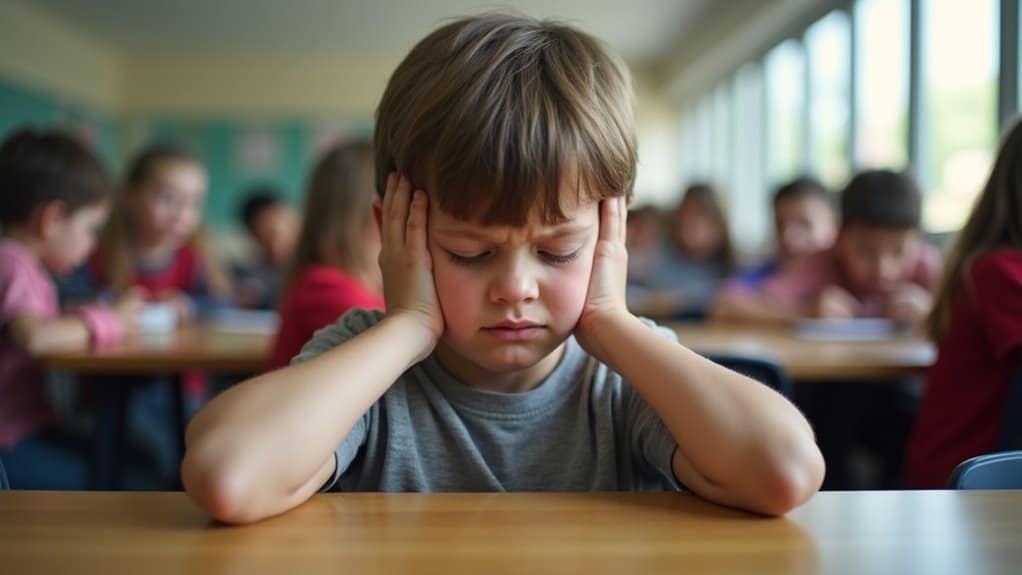
When you consider autism spectrum anxiety across life stages, rates remain heightened, 64% in preschoolers and 69% in school-aged children. Autistic youth are twice as likely to develop anxiety disorders, with 29, 32% meeting criteria for multiple conditions simultaneously. Understanding these prevalence patterns helps you recognize that anxiety in children with autism isn’t occasional, it’s widespread and requires targeted support. Even when excluding common phobias from the analysis, 43% of autistic children still met criteria for an anxiety disorder, significantly higher than the 17% rate observed in typically developing peers. Research indicates that adolescents and school-age children with autism experience the highest prevalence of clinical anxiety at 40%, along with subclinical anxiety at 26%. Among children with an anxiety diagnosis, 96% qualified for at least two anxiety disorders, highlighting the complex nature of anxiety presentations in this population.
What Types of Anxiety Do Autistic Children Experience?
Autistic children don’t experience a single type of anxiety, they face a spectrum of anxiety disorders and atypical presentations that often differ from their neurotypical peers. Understanding co-occurring autism and anxiety helps you recognize the unique challenges your child faces.
Autistic children face multiple anxiety types and atypical presentations that differ significantly from their neurotypical peers.
Common anxiety types include:
- Specific phobias affecting up to 29.8% of autistic children, often triggered by sounds, objects, or situations intensified by sensory sensitivities
- Social anxiety disorder (16.6-20% prevalence), stemming from difficulties interpreting social cues and fear of rejection in group settings
- OCD (17.4% prevalence), where repetitive behaviors serve as coping mechanisms for intrusive thoughts and distress
Sensory anxiety children experience differs from typical worry, it’s rooted in overwhelming stimuli like lights, noises, or textures. Your child may also show generalized anxiety, separation fears, or distress around routine changes that don’t fit traditional diagnostic categories. Anxiety can manifest with physical symptoms like racing heart, shortness of breath, agitation, shaking, or sweating that may be difficult for children to articulate. Some children develop anxiety that doesn’t align with existing diagnostic criteria, presenting unique patterns that require individualized assessment and support. Research shows that 91.6% of high-functioning children with ASD enrolled in anxiety treatment trials met criteria for two or more anxiety disorders simultaneously. These challenges highlight the importance of understanding the various types of anxiety disorders in children, as traditional models may overlook their unique experiences.
Why Are Autistic Children More Vulnerable to Anxiety?
| Vulnerability Factor | Impact on Anxiety |
|---|---|
| Sensory overload | Unpredictable triggers create constant vigilance |
| Social communication challenges | Difficulty reading cues intensifies social anxiety |
| Shared genetic factors | Biological predisposition increases risk |
| Camouflaging behaviors | Masking autistic traits augments internal stress |
Additionally, challenges with emotion regulation, social awareness, and exposure to unsupportive environments compound anxiety risk, making thorough understanding crucial for effective support. For many autistic children, anxiety functions as a permanent emotional state rather than a temporary response to specific stressors.
The Real-World Impact of Anxiety on Autistic Children
While anxiety affects many children, its impact on autistic children extends far beyond temporary worry, it permeates nearly every aspect of their daily lives. Routine changes autism anxiety can trigger meltdowns and avoidance behaviors that disrupt learning and participation. School anxiety autistic kids often manifests as absenteeism, impaired concentration, and withdrawal from classroom activities, directly affecting academic achievement and peer relationships. These challenges can mirror symptoms of generalized anxiety disorder in children, making it difficult for educators and parents to differentiate between typical developmental issues and those specific to autism.
Anxiety in autistic children isn’t just worry, it infiltrates learning, social connections, and daily functioning in profound and lasting ways.
The consequences span multiple domains:
- Social connections suffer as anxiety intensifies communication challenges, leading to isolation and limited friendship opportunities
- Physical health declines through sleep disturbances, headaches, and emotional dysregulation that compound daily stress
- Independence stalls when fear restricts engagement with new experiences, reinforcing dependency and limiting skill development
The inability to predict outcomes creates navigating ambiguity that becomes a persistent source of distress for autistic children. This chronic exposure to heightened stress levels can lead to difficulties in daily functioning, relationships, and overall well-being. Research indicates that up to 84% of young autistic people experience clinically elevated anxiety levels. Untreated anxiety doesn’t just create temporary discomfort, it shapes long-term outcomes for autonomy, well-being, and quality of life.
Effective Approaches to Managing Anxiety in Autism

Because anxiety can profoundly limit an autistic child’s participation in daily life, evidence-based interventions customized to their unique needs become essential. Cognitive behavioral therapy stands out as the most effective approach, particularly for verbal children. It teaches your child to identify triggers and challenge irrational fears using visual supports, structured routines, and concrete examples adapted to autistic learning styles.
Sensory and calming strategies provide immediate relief through deep breathing, progressive muscle relaxation, and sensory toolkits containing fidget toys and stress balls. Visual schedules and social stories prepare your child for changes, reducing uncertainty. Applied Behavior Analysis identifies specific triggers and reinforces adaptive coping behaviors through gradual exposure techniques. Functional analysis serves as a foundational component of ABA therapy, systematically examining the relationships between environmental events and anxiety behaviors to develop targeted intervention plans. Parental training programs equip you with proactive and reactive strategies, proving cost-effective while reducing both your child’s anxiety and your own stress. Research shows that 80% of children demonstrated increased adaptive and social behaviors following parental training interventions. Helping your child recognize and describe their anxiety symptoms builds crucial self-awareness, and speech therapy can aid in developing the communication skills necessary to express their needs effectively.
Recovery is possible, and you deserve support every step of the way. If you’re dealing with substance dependence while managing your career, you don’t have to choose between getting help and keeping your job. Miami Substance Abuse Treatment helps connect you with trusted treatment providers across Miami who specialize in flexible outpatient care for working professionals. We’ll match you with a program that respects your schedule and commitments. Taking this step takes strength call us at (786) 228-8884 and let us help you find care that fits your life.
Frequently Asked Questions
Can Anxiety in Autistic Children Be Mistaken for Challenging Behavior?
Yes, anxiety in your autistic child can easily be mistaken for challenging behavior. You might see aggression, tantrums, or noncompliance that actually stem from underlying anxiety rather than defiance. Since anxiety affects 40, 80% of autistic children and overlaps with autism traits, it’s often misinterpreted. When your child’s behaviors intensify or change, consider anxiety as a possible cause. Multi-modal assessments help distinguish anxiety from other factors, ensuring you’ll provide appropriate support rather than ineffective interventions.
At What Age Does Anxiety Typically First Appear in Autistic Children?
Anxiety symptoms in your autistic child can emerge as early as toddlerhood, with notable signs typically appearing between ages 3 to 5. Research shows that about 45% of autistic children aged 4, 5 already experience clinical levels of anxiety. You’ll often notice separation anxiety and specific fears initially during these preschool years. These symptoms tend to persist and may shift as your child matures, making early recognition and support paramount for their emotional well-being.
Do Anxiety Medications Work Differently for Children With Autism?
Yes, anxiety medications often work differently for children with autism. SSRIs and other medications show mixed effectiveness, and your child may experience unique side effects like behavioral activation more frequently than neurotypical peers. This happens because children with autism have different serotonin pathways and neurometabolic profiles. There’s no FDA-approved anxiety medication specifically for autism, so treatment requires careful individualization. Working closely with your child’s healthcare team helps identify what works best while monitoring for unexpected responses.
How Can Parents Tell if Their Autistic Child Is Experiencing Anxiety?
You’ll notice behavioral shifts like increased meltdowns, withdrawal from activities, or rigid adherence to routines. Watch for physical signs such as sleep problems, appetite changes, stomachaches, or intensified stimming. Your child might show heightened irritability, seek constant reassurance, or struggle with focus. Pay attention to sensory overload reactions and distress during changeovers. Since autistic children often can’t verbalize anxiety, these changes in behavior, body responses, and emotional regulation become your primary clues that something’s wrong.
Does Reducing Anxiety Improve Core Autism Symptoms in Children?
Reducing anxiety can improve some challenging behaviors associated with autism, though it doesn’t eliminate core autism traits. When your child’s anxiety decreases, you’ll likely notice improvements in sensory sensitivities, flexibility with changes, and social engagement. Modified cognitive behavioral therapy shows strong results, 38, 71% response rates, particularly for children with higher functioning autism. You’ll see fewer avoidance behaviors and increased adaptive skills. However, most evidence focuses on short-term outcomes, so we’re still learning about long-term benefits.