





Your child’s separation anxiety follows a predictable pattern: it emerges around 6-8 months when object permanence develops, peaks intensely between 12-24 months with crying and clinging behaviors, then gradually diminishes during preschool years as self-reliance grows. By ages 4-6, most children adapt to separations like school drop-offs, though some experience temporary setbacks during stressful life stages. Understanding what’s typical at each developmental phase helps you respond with appropriate support and recognize when anxiety might need professional attention. It’s important to monitor how your child copes with separations and identify any recurring anxiety triggers in children.
Early Infancy (0-6 Months): Before Separation Anxiety Begins
During the initial six months of life, infants don’t yet experience true separation anxiety because they haven’t developed the cognitive ability to understand that you continue to exist when you’re out of sight. This concept, called object permanence, emerges later in development. Your baby’s limited memory span means they can’t hold mental images of absent caregivers for extended periods.
Instead of separation-specific distress, young infants display global distress responses, crying when hungry, tired, or uncomfortable, regardless of who’s present. They rely heavily on sensory cues like your smell, voice, and touch for immediate comfort rather than visual recognition alone. Since emotional regulation is underdeveloped at this stage, your baby needs direct physical soothing. Any crying during brief absences typically reflects unmet needs rather than anxiety about separation itself. At this early stage, babies do not yet comprehend the concept of permanent separations from their caregivers. However, some babies may begin showing stranger anxiety as early as 3 months old, which can be a precursor to later separation concerns. This early stranger anxiety makes babies feel clingy around unfamiliar people, as they become worried that their needs won’t be properly met by someone other than their primary caregiver.
Late Infancy (6-12 Months): The Emergence of Separation Anxiety
As your baby reaches 6 months, a profound cognitive shift begins that fundamentally changes their emotional world: they start to grasp that you continue to exist even when they can’t see you. This development of object permanence triggers infant separation anxiety, typically peaking between 8, 10 stages as a normal separation distress milestone.
You’ll notice intense crying during departures, clinginess with unfamiliar adults, and sleep disturbances. Your baby may resist exploring their environment, anxiously tracking your movements. These separation anxiety lifecycle phases reflect strengthening attachment bonds and improving sensory awareness, your child now recognizes your absence and lacks understanding that you’ll return.
Most infants experience these symptoms with varying intensity. Consistent routines, predictable separations after feedings or naps, and gradual exposure to new caregivers help your baby develop healthy coping strategies. Separation anxiety may worsen if your infant is hungry, tired, or not feeling well, so timing separations when your baby is well-rested and fed can ease the transition. While separation anxiety is common during this developmental stage, persistent difficulty calming down after you leave may warrant consultation with your pediatrician.
Toddler Stage (12-24 Months): Peak Anxiety and Exploration
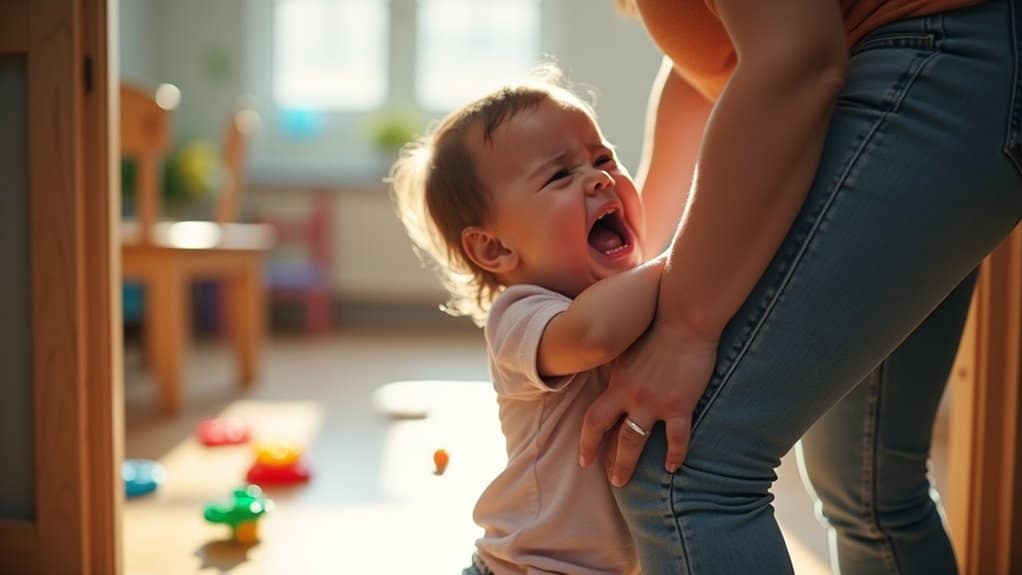
Between 12 and 24 months, your toddler’s separation anxiety reaches its most intense peak, often manifesting as dramatic protests, persistent clinginess, and distress that can feel overwhelming for both of you.
Between 12 and 24 months, separation anxiety peaks with dramatic protests and clinginess that can overwhelm both parent and child.
This toddler separation anxiety stems from key developmental shifts: your child now understands you exist when you’re gone (object permanence), yet lacks the emotional tools to manage that awareness. You’ll likely notice:
- Separation protest behaviors include loud crying, tantrums, and physical resistance during drop-offs or bedtime routines.
- Shadowing patterns involve constantly following you room-to-room and refusing even brief separations.
- Transitional object attachment refers to increased reliance on comfort items like blankets or stuffed animals.
As your toddler’s verbal skills and memory improve after 18 months, they’ll gradually anticipate your return, helping anxiety naturally diminish. Your child may also need time to warm up to new caregivers or unfamiliar environments before feeling comfortable. During this stage, introducing family and friends can help your child become more comfortable with different caregivers and ease future separations.
Preschool Years (2-4 Years): Developing Independence and Emotional Security
While your toddler’s intense separation protests begin to ease around stage two, the preschool years bring a new dynamic: your child’s fierce drive for independence collides with their still-fragile emotional security. This age-related separation behavior manifests as unpredictable reactions, confident one moment, clingy the next during drop-offs or shifts.
Preschool separation anxiety affects 10, 20% of children this life stage, making it the most common period for these concerns. You’ll notice your child developing basic coping mechanisms like carrying transitional objects or establishing goodbye rituals. However, their emotional regulation skills are still emerging, leading to outbursts or somatic complaints like stomachaches. Separation anxiety is considered a normal trait in children up to the age of 6, so these reactions during the preschool years typically fall within expected developmental patterns. Additionally, it’s important to be mindful of external factors that may exacerbate separation anxiety, including specific stressors such as changes in routine or significant life events. Some studies suggest that certain foods causing anxiety in children, such as those high in sugar or artificial additives, may also contribute to increased symptoms.
Your parenting approach matters greatly: supportive, consistent routines coupled with gentle exposure to separations help build emotional security, while overprotective or inconsistent responses can intensify clinginess at different periods. Research on kindergarten children reveals that overprotection parenting styles are adopted by over half of parents, showing a significant association with increased separation anxiety levels. When separation anxiety becomes severe, preschoolers may also experience high levels of co-morbidity with other internalizing or externalizing disorders.
Early School Age (4-6 Years): Navigating New Transitions and Environments
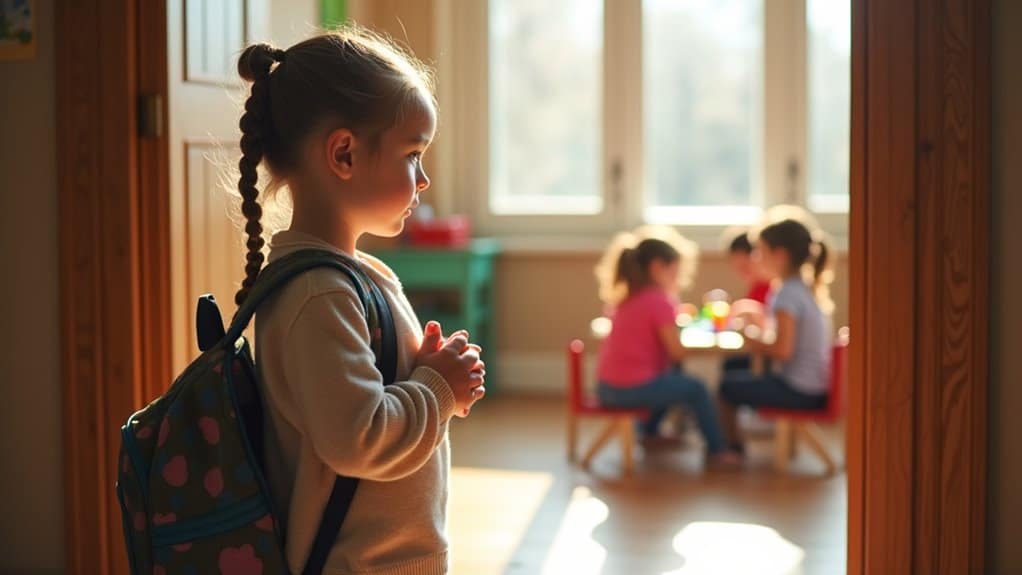
- Physical complaints like stomachaches or headaches that appear before school
- Clinginess at drop-off with tearful protests or refusal to enter the classroom
- Persistent worry about harm coming to you or themselves during separation
Separation fear in young children typically diminishes as they adapt to new routines. However, consistent reassurance, gradual exposure, and maintaining predictable goodbye rituals help ease this shift effectively. Life stresses or loss, such as divorce or the death of a loved one, can intensify separation anxiety during this developmental stage. When anxiety symptoms interfere with normal activities like attending school or participating in playdates, professional evaluation may be necessary to determine if treatment is needed. In some cases, children may display adjustment disorder symptoms in children, which can manifest as heightened emotions, behavioral issues, or trouble concentrating.
Older Children (6+ Years): When Separation Anxiety Persists or Returns
New stressors, family changes, moves, or phases, can trigger recurrence even in children who previously coped well. Adolescents may shift focus from personal distress to external threats like violence or accidents. When separation anxiety persists beyond stage-appropriate expectations, cognitive behavioral therapy offers evidence-based support. Early intervention helps your child develop coping skills, maintain peer connections, and achieve developmental milestones without chronic worry limiting their growth. During middle childhood, separation anxiety remains stable, though individual differences mean some children maintain consistently high symptoms while others follow low or medium trajectories. While most children outgrow these fears naturally, approximately 3% of children continue experiencing separation anxiety into their elementary school years. Persistent separation fears can result in frequent physical complaints such as headaches or stomach aches, particularly on school mornings.
Supporting Your Child Through Each Stage of Separation Anxiety
Because separation anxiety manifests differently at each developmental period, your response as a caregiver should adapt to match your child’s changing needs and capacities. Understanding your child’s emotional development and separation patterns helps you provide life stage-appropriate support.
Effective strategies across developmental periods:
- Maintain consistent routines. Predictable goodbye and reunion rituals reduce uncertainty, while transitional objects (comfort blankets, favorite toys) provide tangible security during absences.
- alidate emotions without reinforcing avoidance. Name your child’s feelings (“You’re feeling worried about me leaving”) while calmly following through with separations to build resilience through positive experiences. Remember that separation anxiety is normative for children under two and signals healthy attachment development rather than indicating a problem.
- Prepare for life changes proactively. Use visual schedules, roleplay scenarios, and advance notice before changes occur, helping children anticipate and adapt to new separation experiences.
During stressful periods, expect temporary regressions and respond with patience rather than frustration.
Every goodbye feels like a crisis. The tears, the clinging, the desperate way they reach for you before you walk out the door. It breaks your heart even when you know you have to go. Separation anxiety looks different at every age and what is normal at two can become something deeper by seven. Knowing the difference is everything. Miami Substance Abuse Treatment helps Miami families understand where their child is in that journey and what kind of support will actually help them feel secure. Call (786) 228-8884 today. Every child deserves to feel safe even when you’re not in the room.
Frequently Asked Questions
Can Separation Anxiety Return After a Child Has Already Outgrown It?
Yes, separation anxiety can return even after your child has outgrown it. Stressful life events like moving, starting a new school, illness, or family changes often trigger recurrence. You’ll notice these episodes are typically short-lived and resolve as your child adapts. However, if symptoms persist, intensify, or interfere with daily activities like school refusal or constant worry, it’s worth seeking professional support. Understanding that recurrence is common helps you respond with patience and appropriate care during challenging shifts.
How Do You Differentiate Normal Separation Anxiety From Separation Anxiety Disorder?
Normal separation anxiety is developmentally-appropriate, brief, and doesn’t prevent your child from engaging in daily activities. Separation anxiety disorder (SAD), however, continues beyond four weeks, causes intense distress disproportionate to the situation, and markedly disrupts school, sleep, and social activities. With SAD, you’ll notice excessive worry about harm to loved ones, frequent physical complaints, severe clinginess even at home, and panic-like reactions during separations. If anxiety interferes with your child’s functioning, professional support is recommended.
Does Separation Anxiety Affect Sleep Patterns and Bedtime Routines?
Yes, separation anxiety dramatically affects your child’s sleep. You’ll likely notice bedtime resistance, prolonged time falling asleep, and requests to co-sleep. Your child may experience frequent nighttime awakenings and daytime sleepiness. These sleep disruptions often create a cycle, anxiety worsens sleep, and poor sleep intensifies anxiety. You might find yourself adjusting bedtime routines to accommodate your child’s distress, but this can inadvertently reinforce sleep difficulties. Understanding this connection helps you address both the anxiety and sleep challenges effectively.
Can Parenting Styles Influence the Severity of Separation Anxiety?
Yes, your parenting style greatly influences your child’s separation anxiety severity. Hostile, coercive, or overprotective approaches intensify anxiety by limiting independence and creating fear around separation. Authoritarian parenting, high demands with low support, correlates strongly with increased anxiety symptoms. Conversely, if you adopt a balanced, authoritative style with warmth and appropriate boundaries, you’ll foster resilience and emotional regulation in your child. This approach encourages independence while providing security, dramatically reducing separation anxiety compared to controlling or overprotective methods.
Are There Cultural Differences in How Separation Anxiety Develops in Children?
Yes, there are significant cultural differences in how separation anxiety develops. If you’re from a collectivistic culture, you’ll likely see higher anxiety symptoms but may view them as normal, since interdependence is valued over early independence. Western cultures typically encourage autonomy earlier, leading to different expression patterns. Hispanic and Black youth often report higher anxiety levels, while Asian families may interpret symptoms differently based on cultural norms around emotional restraint and family connectedness.